Public Speaking Anxiety Treatment Options
Most people need targeted practice, not therapy, to overcome stage fright.
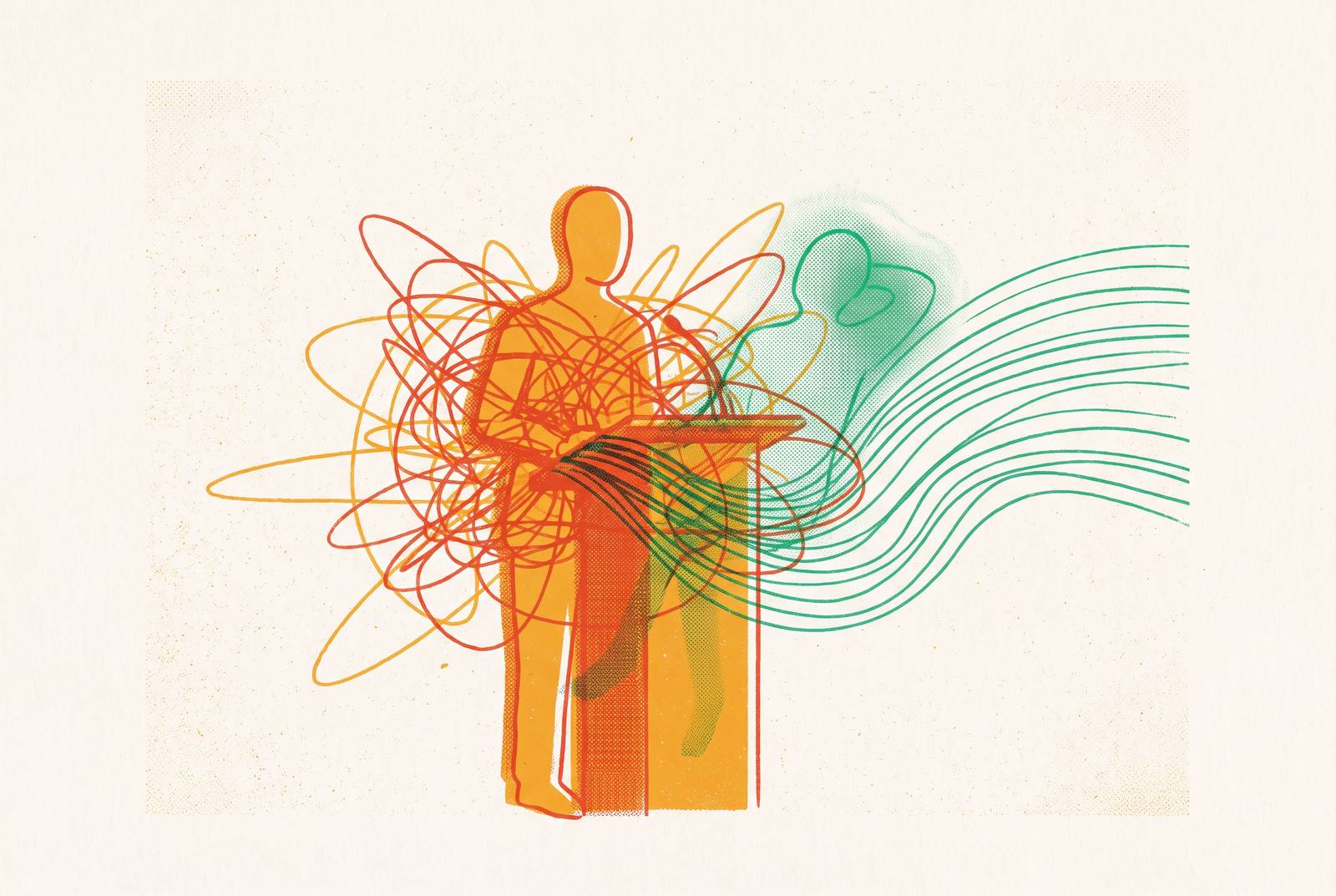
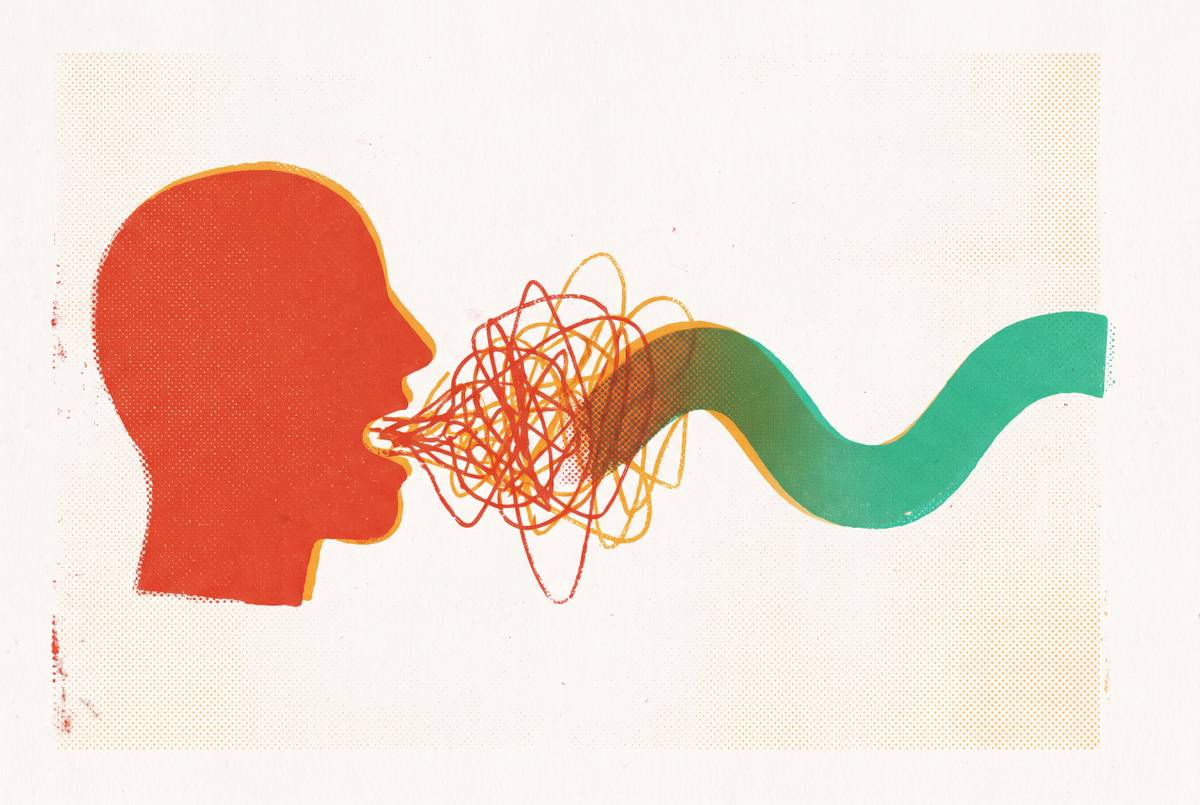
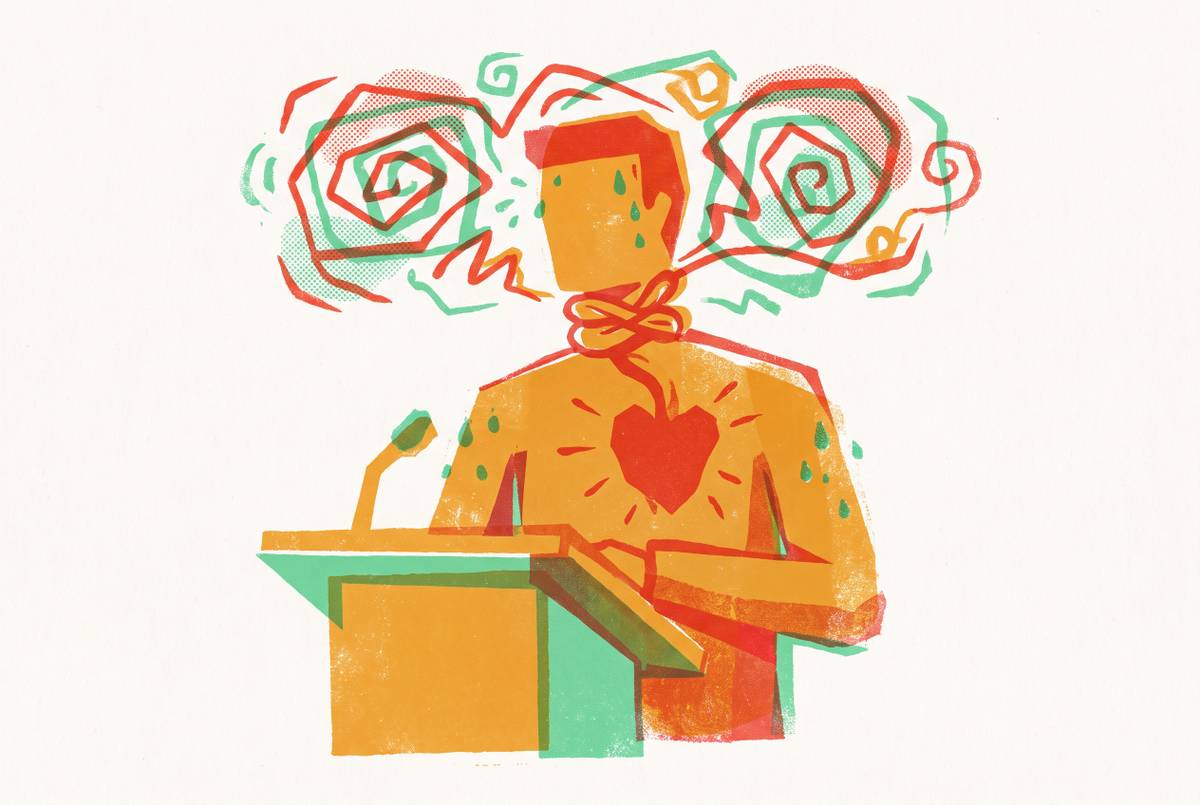
The stomach drops. The hands sweat. The hands sweat, someone else says the thing worth saying, and the moment passes you by. That reaction has a clinical name, glossophobia, and it ranks among the most common anxieties on earth, touching most adults to some degree. The trouble is not that the fear exists. The trouble is that almost everyone experiencing it reads it the same way: as proof of a permanent flaw rather than a normal stress response that happens to be poorly calibrated. That misreading pushes people toward one of two bad outcomes, either avoiding the podium for good or chasing a fix built for a problem they don't actually have.
Most people land somewhere in the middle of this condition, nervous enough to choke in the room or skip the opportunity outright, but nowhere near a clinical phobia. That middle ground needs a different kind of help than what shows up in clinical journals, and treating it like a disorder is often as unhelpful as ignoring it entirely. Making matters worse, the bar keeps rising. A rise in polished TED Talks, AI-generated scripts, and edited video content has raised perceived standards, increasing performance pressure for many professionals, Effective Presentations finds.
Only 8% of people with public speaking fears ever seek professional help, Crown Counseling finds. That's not because help is scarce or because the fear is somehow untreatable. Most people simply never figure out which kind of help fits their particular case. Some need a therapist. Some need forty minutes a week practicing in front of a mirror. Almost nobody is told which one applies to them, which is the actual question this piece is built to answer: where does a given case of nerves sit on the spectrum, and what does that location say about the right next step?
What is happening in the body and brain when speaking anxiety strikes
The fear itself is a threat-detection system doing its job on the wrong target, treating a conference room full of coworkers the way it would treat a predator in a clearing. The amygdala fires, and once it does, it pulls resources away from the prefrontal cortex, the part of the brain handling recall, planning, and the kind of coherent sentence-building a presentation requires. That tradeoff explains something almost every nervous speaker has lived through: forgetting a line mid-sentence despite having rehearsed it dozens of times, not from lack of preparation but from a brain that temporarily reallocated its own processing power.
What makes this worse is a trick of perception, not biology. Research cited by Effective Presentations describes something called the Spotlight Effect, visible in data showing that speakers consistently and dramatically overestimate how much an audience notices their nerves. A shaking hand feels like a siren to the person holding it and barely registers to the audience watching. The fear of being judged outpaces the actual judgment by a wide margin, almost every time.
There's a useful piece of leverage buried in the biology itself. Anxiety and excitement produce nearly identical physical signatures, racing heart, tight chest, heightened alertness. The nervous system doesn't need to calm down before a speech. It needs to get relabeled. Telling yourself "I am excited" works better than telling yourself "I am calm," because talking yourself down from a high-arousal state fights the body's current, while renaming that same energy works with it. That one reframe carries real weight for how people should prepare, but a nervous system that stays on high alert across nearly every social situation needs clinical attention to the mechanism itself before any reframing technique has a chance to stick, while mild or moderate nerves often respond to understanding and reframing alone.
How the severity spectrum maps to a treatment spectrum
Before picking a fix, it helps to know what's actually being fixed, since the tools that work at one level of anxiety do nothing, or worse, too much, at another. Three zones cover most of the range.
The first is common nerves: the fear appears before speaking and fades once it starts, stays proportionate to the actual stakes, and never stops anyone from raising a hand or taking the assignment. Most people sit here, and for this group, consistent practice and basic behavioral habits are enough on their own.
The second zone is performance anxiety, a fear that doesn't fade once the speaking starts and runs well out of proportion to the actual stakes. It drives real avoidance, skipped assignments, declined presentations, interviews gone badly for no reason related to competence, and its physical symptoms run intense without becoming debilitating. Effective Presentations calls this the "completely coachable" middle ground, and the label fits: structured exposure, reappraisal techniques, and supported practice do the heaviest lifting here.
The third zone is social anxiety disorder, where the fear is no longer limited to speaking but extends to most situations involving social evaluation. Avoidance becomes pervasive, and symptoms can include panic, dissociation, or weeks of dread that build before a single event. Mayo Clinic notes that performance anxiety paired with serious anxiety in other social contexts may point to social anxiety disorder rather than simple stage fright, and clinical tools, therapy and medication, belong at the front of treatment here.
The line between zone two and zone three affects which treatment approach is appropriate, because both can present as identical stage fright in the moment. NIH and PMC research shows roughly half of adolescents and adults with public speaking anxiety go on to develop generalized social anxiety, so zone three calls for a professional assessment rather than a self-help routine, since the condition driving it runs broader than the fear of a podium. The decision rule that falls out of all this is simple enough: if the fear stays confined to formal speaking situations and responds to preparation and practice, start with behavioral tools. If it bleeds into social life broadly, or if the physical symptoms are severe and won't let up, clinical support comes first.
Clinical treatments for the severe end
CBT is the established first choice. It's a skills-based therapy aimed at the distorted thinking that keeps the fear alive, catastrophizing a minor stumble into a disaster, overestimating how much a room is paying attention, running the Spotlight Effect in a loop, paired with grounding and reframing exercises that interrupt the pattern. Mayo Clinic's own description of CBT doesn't spell out those specific terms, but the mechanism they describe lines up with how the therapy is broadly understood. CBT applies both to speaking-specific phobia and to the wider social anxiety disorder it often sits inside.
Medication plays a narrower, more situational role. A doctor may prescribe a calming medication to take before a speaking event, and Mayo Clinic says you should test it ahead of an actual event rather than trying it cold on the day that matters. A 2020 pilot study published in NCBI tested a different angle: a stress-inducing speech task paired with either 40 milligrams of propranolol or a placebo, aimed at the brain's memory reconsolidation process rather than just blunting symptoms in the moment. The propranolol group showed clear drops in both self-reported distress and standard questionnaire measures of speaking anxiety, so targeting the memory itself, not just the adrenaline, may be a route worth developing further.
None of this replaces skill-building. Medication manages the symptom in the moment; it doesn't teach anyone how to structure an opening or hold a pause. Mayo Clinic's own guidance backs this up: the biggest gains against social anxiety disorder come from combining therapy, medication, and lifestyle changes together. And the gap between what exists and what gets used stays wide. The overwhelming majority of people with public speaking fears never seek professional help at all, Crown Counseling finds, whether the reason is cost, stigma, or a flat assumption that this is just who they are. Even where clinical treatment is the right call, it functions as a foundation, not an endpoint. It clears the physiological blockage enough for the behavioral work, the exposure, the rehearsal, the daily repetition, to actually take hold.
Virtual reality exposure therapy: how simulated stakes produce real habituation
VR exposure therapy works on a simple premise: the brain's threat system can't reliably tell a simulated audience from a real one. VR works as a legitimate form of graduated exposure rather than a glorified training video, because that is the entire reason the technology works.
The research backs the premise up directly. A study published in PMC found that short, repeated VR sessions using a virtual audience both triggered genuine public-speaking distress and produced habituation, with the anxiety response measurably dropping across repeated exposures, the mechanism that makes exposure therapy work. The same research found something even more telling: giving a speech inside a VR environment produced physiological arousal and distress on par with giving one to a live room. The body doesn't treat the simulation as a lesser event, so it responds, and adapts, as though the stakes were real.
The approach isn't confined to adults either. A feasibility study published in Child and Adolescent Psychiatry and Mental Health tested VR exposure therapy on adolescents with fear of public speaking and found it workable for that age group, which matters given how much of this anxiety first takes root during school years.
One concrete build-out shows where this is heading. A Cambridge researcher, Dr. Chris Macdonald, built a platform that pairs tailored course material with photorealistic VR environments and an AI coach. The University of Cambridge reports that most users felt more confident and engaged after a single 30-minute session, and in a trial run with students from Cambridge and UCL, a week of self-guided use benefited 100% of participants. The platform went public on World Speech Day in March 2025, and you can use it for free.
That price point points to a bigger shift. Consumer VR hardware now lets you do this kind of exposure outside a research lab. What once needed a therapist's office and specialized equipment now runs through accessible platforms, moving VR exposure out of the clinical tier and down toward the much larger group of people dealing with everyday performance anxiety.
None of this makes VR a finished solution on its own. The habituation built inside a headset still has to transfer to an actual room full of actual people, so VR works best paired with real-world practice as rehearsal with better feedback rather than substituted for it.
Gradual desensitization and daily practice as the most accessible path for most people
For most people living with this fear, the most effective fix is also the cheapest and least exotic: repeated exposure to speaking situations that raise the stakes a little at a time. The underlying mechanism is the same nervous-system retraining a clinical therapist would aim for. It's just reached through ordinary practice instead of a treatment plan.
Mayo Clinic lays out what that progression actually looks like in practice. It starts small: introducing yourself to one new person, offering a single comment in a small group discussion, recording a short video alone in a room with no audience. Each of those steps is boring by design, and that's the point, because the goal is building tolerance one rung at a time rather than jumping straight to the keynote and hoping for the best. As the easy version stops producing much of a reaction, the next version gets harder: a slightly bigger group, a slightly higher-stakes room, a slightly longer stretch of unscripted talking. The threat response erodes gradually, the same way it would through a VR headset or a therapist's office, just without either one.
A handful of specific techniques, pulled from both Effective Presentations and Mayo Clinic, make the practice itself count for more. If you memorize the opening line word for word, you have something to run on autopilot during the stretch when anxiety peaks hardest and working memory is least reliable. Pausing deliberately after a key point does real work too: silence reads as control rather than hesitation, and nervous speakers tend to rush to fill every gap with sound, when a three-second pause actually signals authority and gives the room a beat to absorb what was just said. Deep, slow breathing before and during a talk pushes back directly against the physical arousal driving the whole episode. And the reframing trick from earlier applies here too: the same racing heart that reads as dread can get relabeled as excitement, because the body can't tell the difference and the mind, with enough practice, learns to pick the more useful story.
Frequency, not occasion, ties all of it together. A single big rehearsal the night before a major talk does far less for the nervous system than low-stakes speaking practiced daily, because habituation is built through repetition, not intensity. The brain doesn't file away an occasional long session nearly as well as it files away a short one repeated often enough to become routine. That's the actual advantage the accessible path has over the clinical one: it doesn't require a diagnosis, a prescription, or a headset. It requires showing up to the easy version of the fear often enough that the body stops treating it as one.
Sources
- 66 Public Speaking Statistics 2026 Report: Fear, Trends, Facts +Impact
- 48 Public Speaking Statistics for 2026
- 30+ Revealing Fear of Public Speaking Statistics for 2026
- Public Speaking Statistics (2026): 40+ Data Points on Glossophobia, Career Impact, and the Speaking Economy — VoxBooster
- Public Speaking Anxiety Statistics 2026
- 47 Fear Of Public Speaking Statistics (Prevalence)
- pmc.ncbi.nlm.nih.gov
- ncbi.nlm.nih.gov