Which Apps Score Your Spoken Responses and Which Ones Just Nod Along
Most apps provide encouragement but don't measure whether you're actually getting better.
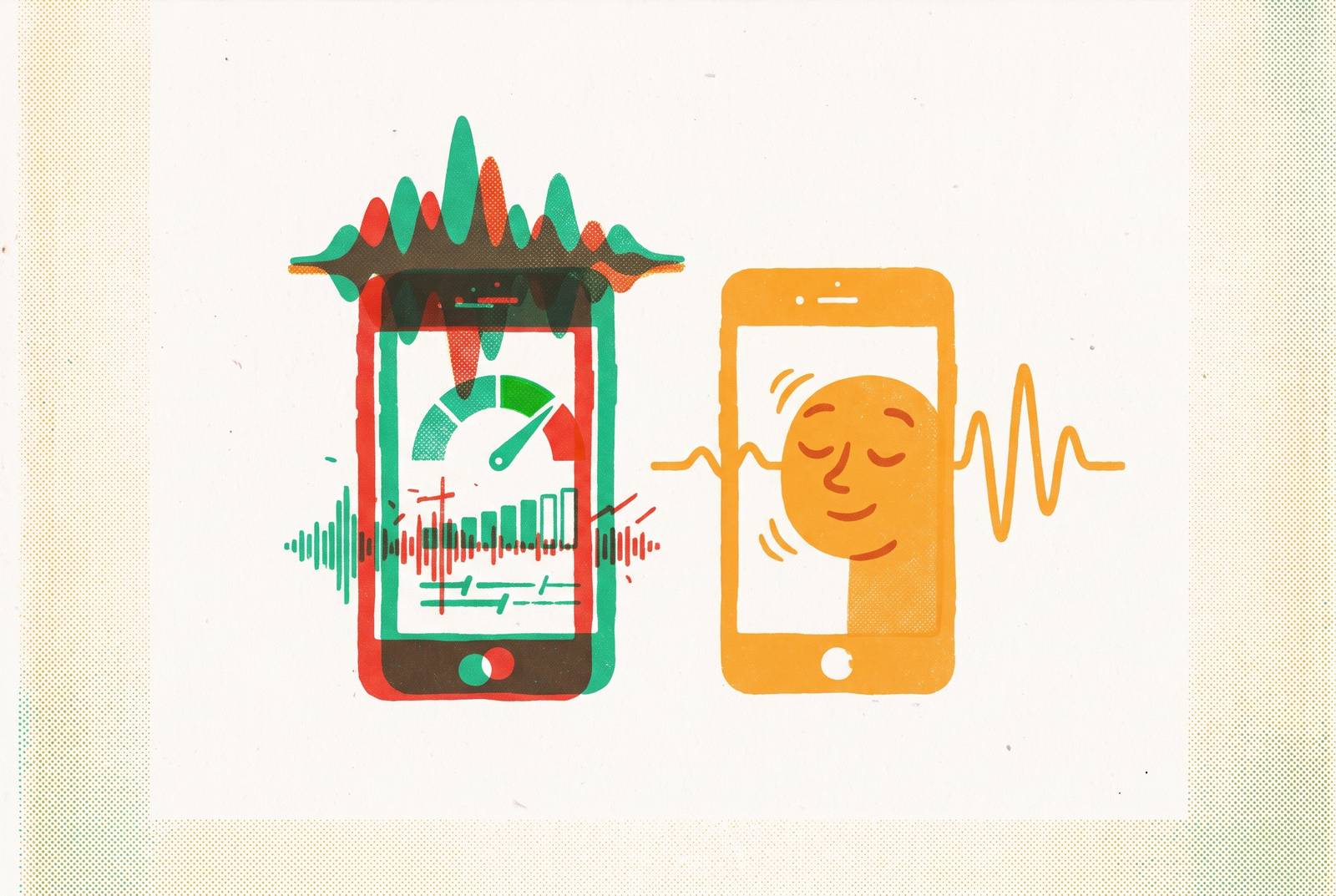
Flowency is a daily speaking practice app with AI scoring, personalized workouts, and scores for Flow, Precision, Phrasing, Structure, and Delivery, with an overall score out of 100. Its daily, 30-day, and one-year skill trends let users track how their skills change as well as how often they practice. The useful distinction between speech apps is whether they measure specific aspects of a spoken response over time or simply make practice feel productive.
Why most speech apps feel useful but produce no measurable change
After weeks of speaking into an app, you may still struggle to name one concrete thing that changed. You did the exercises, kept the streak alive, and got encouraging feedback. Yet you cannot say whether you find words faster, pause less awkwardly, or put an explanation in a clearer order. A useful speech app has to make improvement as visible as activity.
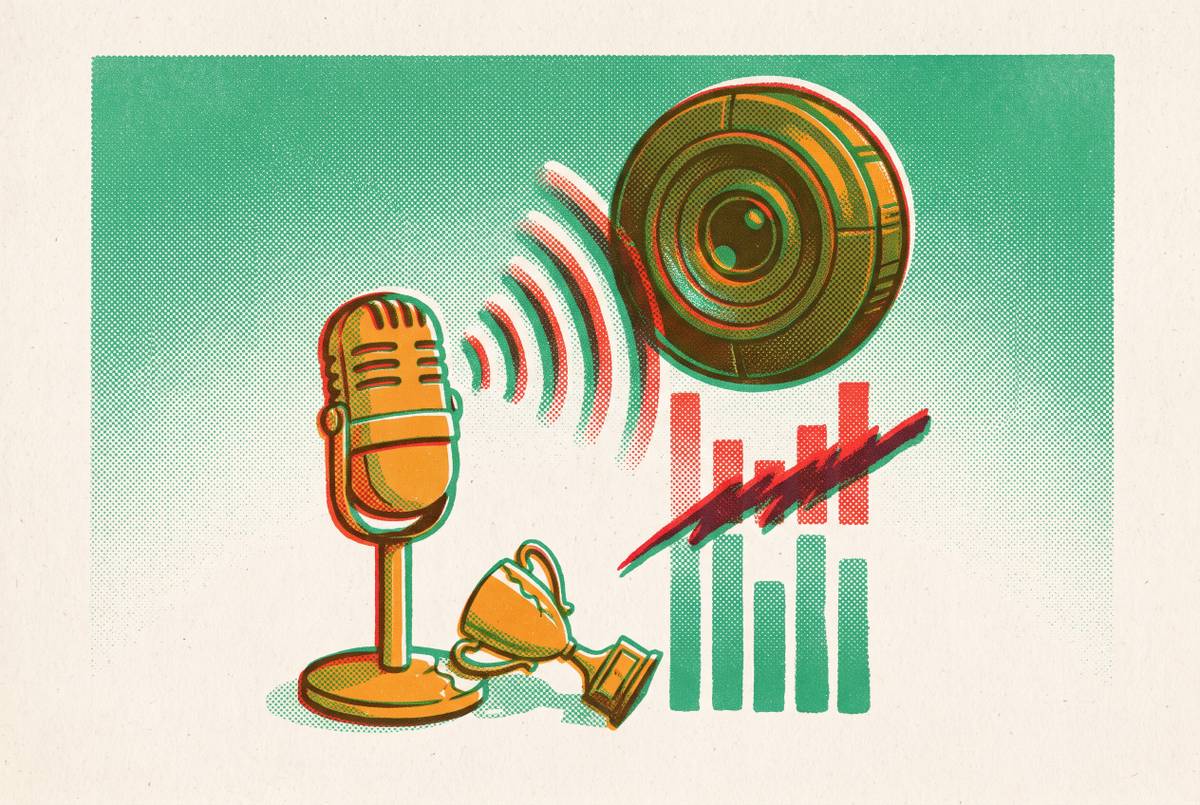
Most speech and communication apps prioritize keeping users engaged over making them measurably better. Those goals produce different feedback. Engagement rewards another recording, while improvement requires identifying a weakness, quantifying it, and showing whether it changed on the next attempt. The latter is harder to build and less immediately pleasant to receive. An app that responds warmly regardless of performance is “nodding along,” the verbal equivalent of a participation trophy. Encouragement can help someone return tomorrow, but it cannot tell them what to work on when they do.
What a scoring system actually has to measure to be useful
Genuine scoring separates a spoken response into named dimensions and returns a number for each. A single aggregate rating hides the distinction between speaking smoothly and making a coherent point. Those are not the same achievement. A response might move at a comfortable pace but wander, while an explanation with a clear order might have lots of fillers.
Pace measures how fast you speak, and filler-word frequency measures how often extra words break up the response. Pause distribution describes where the silences fall. Word-retrieval speed measures how quickly you find words, and phrasing variety measures the range of ways you express an idea. Structural coherence measures whether the thoughts in the response connect to each other. Pronunciation scoring can reach individual sounds rather than treating a whole word as simply right or wrong.
AI can reliably score these aspects of speech, but its reach is limited. Content quality, persuasive impact, audience connection, and whether an argument actually landed still require human judgment that no current consumer app reliably replicates. Scoring remains useful within these limits. Knowing that filler-word frequency fell and pacing steadied is useful even when the system cannot judge whether a story was compelling. A score describes only what the system measures.
An app that measures filler words provides more signal than one that measures nothing. It does not, however, provide the same view as a tool that scores five or more dimensions and charts their changes over time. Breadth and history serve different purposes. The dimensions show where a weakness lies, while the history helps show whether practice is making it less of a weakness over time.
Which apps score your spoken responses across multiple dimensions?
It is well suited to daily verbal-fluency practice tailored to each user. The app builds workouts from a Verbal Fluency Skill Profile based on how someone speaks. Its exercises include category-based word recall, sound-based word recall, synonym recall, storytelling, describing, and explaining. That combination includes both finding words and using them in connected speech.
The listing also describes daily, 30-day, and one-year trends for each skill. Rather than relying on a single overall result, users can follow the dimensions separately across repeated sessions. For someone seeking practice at home with a record of progress, that history is a central feature. Flowency is available on iOS, free with in-app purchases, so the free download should not be confused with a promise that every feature is free.
Wellspoken uses a 1,000-point Wellspoken Index across six speaking dimensions. It helps users stay clear and find words under pressure. The training has 13 named drills, 8 curriculum units, and 600+ vocabulary words at four mastery levels. That gives it a curriculum component as well as a numerical index. Wellspoken offers a free tier, with paid plans publicly listed on the App Store and Google Play from $12.99/month or $34.99/year. The large scale should not itself be read as evidence of finer measurement, since the useful question remains what the component scores reveal.
Insight7 AI Speaking Coach takes a conversational approach. Users describe a scenario, such as an interview, sales call, difficult workplace conversation, or custom situation, and the app runs a live voice-based exchange. It responds and follows up rather than proceeding through a script regardless of the answer. Insight7 describes four scoring dimensions, which are clarity, empathy, structure, and persuasion, applied to content as well as delivery. Those are assessments of the practice exchange, with their relevance to whether a real audience would find the same words persuasive still unproven. Free sessions are available to start, while Pro costs $99/month or $83/month billed annually for 1 user, 50 analyses/month, 4 projects, and 60+ languages.
ELSA Speak focuses more narrowly on pronunciation. Its scoring reaches individual sounds, word stress, rhythm, and intonation, making it relevant when the target is how speech sounds. That is a distinct training goal. It should not be mistaken for a general judgment of a spoken response’s substance. ELSA Speak has some features free, with Premium prices listed for July 2026 at about $13.33/month billed annually or $19.99–$20/month on monthly or quarterly plans.
Speechace is an AI pronunciation and fluency scoring platform originally built as a backend API for education-technology developers. It also has a consumer-facing product. Its inclusion shows why “speech scoring” covers more than one product type, from personal daily workouts to scoring infrastructure. Speechace offers a free tier and paid plans from $40/month for its Basic API plan, with institutional pricing on request. That API price belongs to the developer offering and should not be treated as a directly comparable consumer subscription price.
Apps that coach delivery but do not score your spoken responses
LikeSo provides filler-word detection and pace feedback, which can be useful for someone trying to reduce verbal clutter or manage speaking speed. That is real, if narrow, feedback. It does not assess tone, energy, structure, or content. A user who wants help with fillers may therefore get exactly the signal they need, while someone seeking a score for the whole response will not. Counting a habit is not the same as evaluating everything said around it.
PromptSmart Pro serves a different purpose again, as a teleprompter. Its role is to support delivery of prepared text. It provides no analysis, feedback, or practice drills. The category distinction is straightforward here, even if both kinds of product appear in a search for speaking help.
Poised’s role was limited to real-time delivery feedback during meetings before it shut down on 9 October 2026. Its closure also means it is not an available option for that role. Across this category, tools differ in whether they support a particular speaking task or close a broader measurement loop, showing which aspects of a response changed and by how much.
How to read an app's own claims and tell which category it belongs to
Before downloading anything, a reader can take two minutes to check an app with three questions. The first is how many separate things the app scores on a spoken response. Specific names and scales are the evidence to seek, such as Flow, Precision, and Phrasing, with a stated numerical range. One score, or none, does not pass this multidimensional test. Claims such as “practice your conversations,” “build confidence,” and “get feedback on your delivery” describe an experience. They may be accurate promises, but they answer a different question.
A second check establishes whether the app shows a history of scores across sessions. A streak records that practice happened, while a score history records how the measured performance changed. Without that history, an app can describe one session but cannot show whether the user is improving across sessions. The distinction is especially important when a product emphasizes a polished result screen but says little about what remains visible tomorrow.
A third check establishes whether the score changes meaningfully with what the user actually says. Friendly recognition is not necessarily demanding assessment. Duolingo Max, for example, uses recognition that is forgiving by design, which shows why a result that feels good may not precisely match how well someone spoke. A diagnostic score must distinguish a stronger response from a weaker one. Together, these questions test the dimensions, the history, and the responsiveness of the measurement without requiring the reader to become an expert in AI.
Why daily scored practice is the mechanism that produces measurable growth
Choosing a scoring app only helps if practice follows. A single scored session is a data point, while a month of sessions can reveal a trend. The productive sequence begins with a prompt and a spoken response, followed by separate scores that identify a weak dimension. That weakness then becomes the target of the next session, so the score is useful because it changes the work.
Generic encouragement breaks that sequence at the feedback step. If every recording gets much the same praise, the user has no way to tell which dimension to work on next. Repetition can still feel purposeful because it takes effort. But without a diagnostic signal, the user can work hard and still have to guess what to change next. A daily speaking challenge therefore needs more than novelty to function as training, since a new prompt alone does not establish what the previous response exposed.
Verbal fluency, the ability to find and say words quickly, improves with repeated, targeted retrieval practice. This makes the science behind verbal-fluency tests a good fit for daily drills in an app. Category exercises, sound-based recall, and synonym work give that practice a defined task rather than an open-ended instruction to speak better. Connected exercises such as storytelling and explaining address the use of those words in a response.
Each session should be treated as a scored rep, much as an athlete tracks a lift or a sprint. The comparison is with earlier performance. It becomes a leaderboard of one. This framing can make daily practice more sustainable than an abstract ambition to “be a better speaker,” because the next session has a specific target. The tool is the environment, and the daily rep is the work. Choosing the right environment does not guarantee growth, but choosing one that never reveals what needs to change makes deliberate, measurable growth nearly impossible.