Storytelling Practice Exercises for Conversational Impact
Well-told stories sync listeners' brains and require deliberate practice, not natural talent.
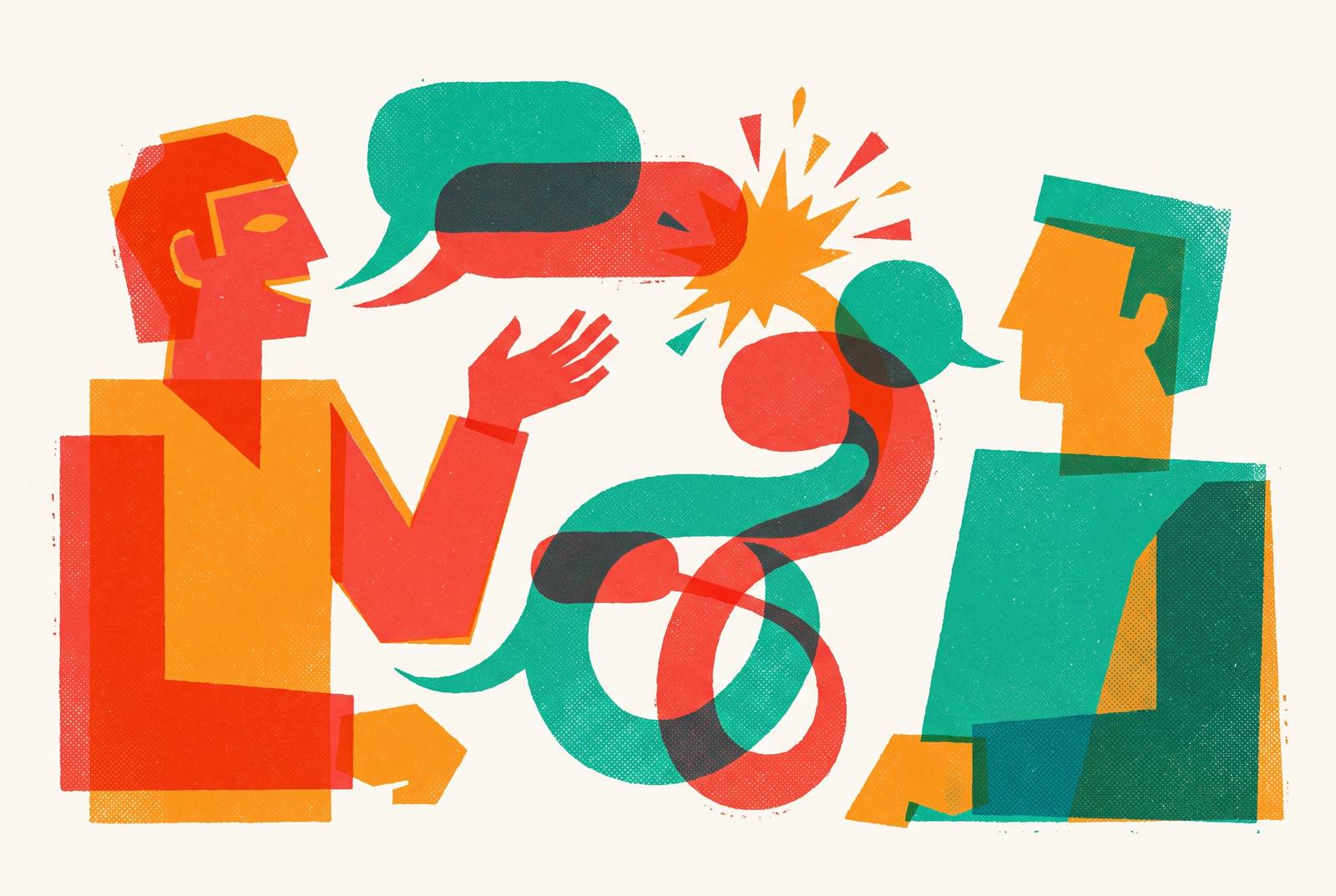
Talking a lot and communicating well are not the same skill, and most people confuse the two for years. Someone can hold a room's attention for ten straight minutes and still leave everyone unclear on what actually happened. Storytelling for conversation, the kind used in job interviews, first dates, and the group chat retelling of a bad flight, trains the same way a jump shot trains: through specific, repeatable drills, not vague advice to "be more interesting." Researchers studying conversational failure keep landing on the same five culprits: too many details burying the point, no structure so the listener can't track where things are headed, a register too formal for the room, a story pitched to nobody in particular, and an ending that just stops instead of landing somewhere. Younger adults report this gap especially sharply, with many noting that text-based exchange offers little practice for the timing and read-the-room instincts live conversation demands.
What the brain does when a story lands (the neuroscience behind conversational pull)
When a story works, something measurable happens between two skulls. Neuroscientists call it neural coupling: the listener's brain activity starts to mirror the speaker's, same regions firing in similar patterns, as if the listener were running a low-resolution copy of the speaker's own experience. Researchers first documented this synchrony in foundational work on the phenomenon, and later research pushed the finding further: a well-told story doesn't just sync one listener, it herds an entire audience's brains toward convergence at once. The better the story, the tighter that alignment gets across every person in the room.
The chemistry backs this up, and it runs on three separate tracks. Dopamine builds as a story creates tension and pushes toward resolution. A mundane subway delay, told well, can feel like a heist plot, and listeners remember it better afterward. Oxytocin does the empathy work: research on oxytocin suggests that the amount released during a story is linked to how willing listeners are to help others once it ended. Connection isn't a nice side effect; it's a measurable output with downstream consequences. Cortisol matters too, since a narrative with real tension and real resolution is thought to engage the same mechanism that makes a cliffhanger impossible to walk away from.
None of this fires on its own. Structure, tension, and resolution are the ignition switch, and a rambling, undirected story trips none of them. Tell someone about your day with no shape, no stakes, and no ending, and their brain stays politely idle for the entire telling.
The foundational practice: telling the same story multiple times to real people
Shawn Callahan's core instruction cuts against how most people rehearse: skip the mirror, skip the solo run-through. The audience is not a passive backdrop for the material, it is half the exercise. Tell the story to a friend, a colleague, a family member, whoever is nearby and willing, and watch what their face does while you talk.
Callahan draws a direct line to Lennon and McCartney, who famously didn't write their music down. They remembered by playing the songs live, often, in quick succession, trusting repetition over documentation. Callahan applies the same principle to stories: tell it three times in quick succession, say over a week, and it locks into memory, especially once the point is clear in the teller's own head.
Repetition in front of real people exposes what solo rehearsal never will. Listeners signal boredom through their bodies well before they say a word, and a teller paying attention learns which details are dead weight almost instantly. It also catches the details the teller didn't know were missing. Callahan tells a story about IBM and a colleague named Steve where early versions of the retelling left out a quiet, offstage conversation about getting Steve's permission, a detail that, once cut, made audiences think he'd appeared to be a jerk who was showing up his coworker. Only live retelling, and the reactions it produced, surfaced the gap.
One rule Callahan holds firm on: never write the story out word for word. A fully scripted story read aloud sounds wooden no matter how well it reads on the page. Bullet points on an index card, at most, and even that is generous.
Structure exercises: finding the shape of a story before opening your mouth
Before a single word gets spoken, questions drawn from Communication in Practice do most of the heavy lifting. How does the story end, and is that the strongest possible stopping point available? Which parts absolutely have to survive to make that ending land with force? And behind both, what causes them, the one idea the whole thing serves?
One exercise from the same source asks the practitioner to tell a tragic story: a failed relationship, romantic, platonic, or professional, the category doesn't matter. Work through what specific details reveal about the other person's character, and how that got discovered. Then identify the exact behaviors that foreshadowed the ending before it arrived.
Tragedy is the better training ground than comedy or triumph, precisely because the emotional stakes are high enough to force ruthless editing. There's no room to ramble when the ending carries real weight. Every unnecessary detail dilutes the payoff, so the exercise trains the instinct to cut before anyone even asks.
Maurice DeCastro's approach adds a deliberate emotional arc on top of the structural bones: start low, in fear, doubt, or frustration, build through rising tension, land on resolution. The twist that keeps listeners hooked is the unexpected element, the failure that quietly produced an opportunity nobody saw coming. That reversal is often the whole reason the story gets remembered.
Subtext and indirection: the exercise that separates good storytellers from great ones
Real people almost never say what they mean, particularly about anything emotional, and dialogue that states feelings outright reads as fake because it is fake, at least relative to how humans actually talk. On-the-nose dialogue is the tell of a story that hasn't been lived in long enough. Most amateur storytellers over-explain the emotional beat instead of trusting the listener to find it, and that single habit is the fastest way to kill a story that otherwise had good bones.
A sharper exercise: rehearse a scene between two estranged siblings meeting after ten years apart. The surface conversation covers their late mother's house, what to do with it, who gets what. The real argument, the one neither sibling says aloud, concerns who abandoned the family first. Neither character names the actual grievance directly, and that restraint is the entire point of the drill.
Inside that scene, three techniques do the work. Word choice signals emotion without stating it. Strategic pauses, meaning what a character deliberately doesn't say, often carry more weight than the dialogue itself. And noticing which topics each character routes around, and why, tells the listener more about the relationship than a direct confession ever could.
A useful variation strips the exercise down to dialogue only, no narration, no stage direction, nothing but two people talking. A heated argument written entirely in exchange. An argument that appears to be about scheduling but is actually about resentment. Two strangers making small talk while waiting for a bus. A secret revealed only through what's said, and more importantly what isn't. Two people who each refuse to say what they actually mean. Two neighbors trading gossip from their windows. Constrain the format, and subtext becomes the only tool left to work with.
Vocal and tonal exercises that change how a story is received without changing a word
Narrate a happy story in a flat, sad tone, any happy story will do, and watch how the listener's read on it changes. Then flip it: tell a genuinely sad story with an upbeat, cheerful voice. The content hasn't moved at all, but the listener's read shifts completely, which proves something most people resist admitting: delivery isn't garnish on top of the content, it is content, arguably the majority of it.
Pace and pitch work the same lever. Recording the same passage at different speeds, slower through the moments that matter, faster through the throat-clearing detail, teaches a speaker to signal importance without ever saying "this part is important." Pitch does similar work: elevate it and the story gets excitement, drop it and the story gets gravity, and the words barely have to change. Vocal warm-ups, humming scales, lip trills, ridiculous alone in a car, matter before any high-stakes conversation, not just before a formal presentation. A first date is a presentation. So is a salary negotiation.
Volume gets used backwards by almost everyone. The instinct is to get louder at the important part, but a whisper at exactly the right moment pulls more attention than raised volume ever will, because it forces the listener to lean in physically to catch it. The pause, real silence held a beat too long after a key line, is one of the most underused tools in conversational storytelling. Silence after a revelation does more work than another ten words ever could.
Eavesdropping and observation as a daily story-sourcing habit
Sit in a cafe, a bar, or on a subway car for ten minutes and write down what people say, word for word, along with how they say it. Afterward, go back through the transcript and ask three things: who holds more power in the exchange, who wants something from the other person, and who's actually listening versus just waiting for a turn to talk.
This trains a skill that has nothing to do with material and everything to do with delivery: reading a room in real time. It's the direct antidote to the failure mode where a story bombs because the teller pitched the wrong tone or ran three minutes too long for an audience that had already checked out. Reading the room is a rep count, same as anything else on this list.
Pairing eavesdropping sessions with a short journal entry afterward sharpens the habit further. What made one person's version of events more compelling than another's, sitting at the same table? Was it structural, getting to the point faster, or tonal, their voice doing something the other speaker's didn't? Naming the mechanism, rather than just noting that something worked, is what turns passive people-watching into an actual skill-building exercise.
Daily scored repetition versus occasional long-form practice
A 2025 meta-analysis in the Journal of Psychology, reviewing 26 studies and roughly 2,000 participants total, found that structured speaking interventions produced significant gains in speaker confidence and satisfaction compared to wait-list control groups. That's not a subtle effect, and it holds across a fairly large pooled sample, unlike any single small study claiming the same thing.
Separate research using VR-based speaking training found something more specific: evidence suggests anxiety reductions accumulate across repeated sessions rather than within a single long one. Short, repeated daily practice outperformed occasional marathon rehearsal, because the nervous system needs multiple spaced exposures to habituate, not one exhausting cram session the night before a big talk. Most people get this backwards. They block off a Sunday afternoon for one long rehearsal and skip the daily five-minute version, when the daily version is the one actually doing the work.
There's also a fluency trap. Obsessing over getting every word exactly right during practice disrupts the natural flow of speech and works against fluency instead of for it. Daily practice should chase smoothness and connection first, and treat correctness as a distant second. None of this compounds without a real feedback loop, either. Vague encouragement, "that was great, good job," produces nothing. What builds the skill is attempt, score, adjust, repeat, the same mechanism that builds a jump shot or a golf swing, just applied to a sentence instead of a joint.
Structured programs and immersive formats for serious practitioners
Daily short-form drills build the floor. For practitioners who want to go further, a handful of structured programs sharpen specific dimensions of the skill in a more concentrated setting, though none of them substitute for the daily reps described above.
Story Camp runs its second annual presentation skills retreat in Boulder, Colorado, from November 3 to 6, 2026, built around a small cohort and hands-on workshops led by expert instructors. Barry Diamond, SVP of Business Development at Cielo Talent, put it bluntly after attending: "The storytelling, the presentation work. We have so many takeaways that we're going to bring back to our company. Story Camp blew me away." AVPN Academy offers a virtual option for those who can't make Boulder: Communicating Impact, a media and storytelling training series held across three sessions from July 20 to 22, 2026 (SGT), priced at USD 1,000 for AVPN members and USD 1,500 for non-members, applications reviewed on a rolling basis, minor date shifts possible.
For self-paced study, three Coursera offerings stand out on reputation and reach. Macquarie University's Storytelling and Influencing: Communicate with Impact holds a 4.8-star rating across roughly 2,500 reviews, runs one to three months, and covers persuasive communication, storytelling technique, rapport building, and influence. IESE Business School's The Art of Storytelling runs 4.6 stars from around 1,200 reviews, takes one to four weeks at a beginner level, and focuses on oral expression and active listening. Northwestern's Leadership Communication for Maximum Impact: Storytelling holds 4.5 stars across roughly 1,400 reviews, also one to four weeks, and leans into strategic communication, personal branding, and crisis communication.
The order of operations affects how well the skills stick, more than which program gets picked does. Build the baseline alone first, in cafes and living rooms and awkward retellings to patient friends, then bring that baseline somewhere it gets stress-tested by people who do this for a living. Skipping straight to the retreat or the certificate without the daily reps underneath it leaves nothing for the structured program to sharpen.
Sources
- Communicating Impact: Media and Storytelling Online Training Series - AVPN Academy
- 10 Ways to Develop Strong Public Speaking Skills in 2026 | by Maurice DeCastro | Medium
- How to Make Stories Stick: Lessons from Paul McCartney and Everyday Practice
- 11.7 Practice Exercises – Communication in Practice
- STORY CAMP® — Presentation Skills Training & Workshops
- The Neuroscience of Storytelling: Why The Brain Learns More From Stories
- How a speaker herds the audience: multibrain neural convergence over time during naturalistic storytelling
- coursera.org