Tell Me About Yourself as a Verbal Performance Skill
Interviewers evaluate composure and clarity in your opening answer, not your resume.
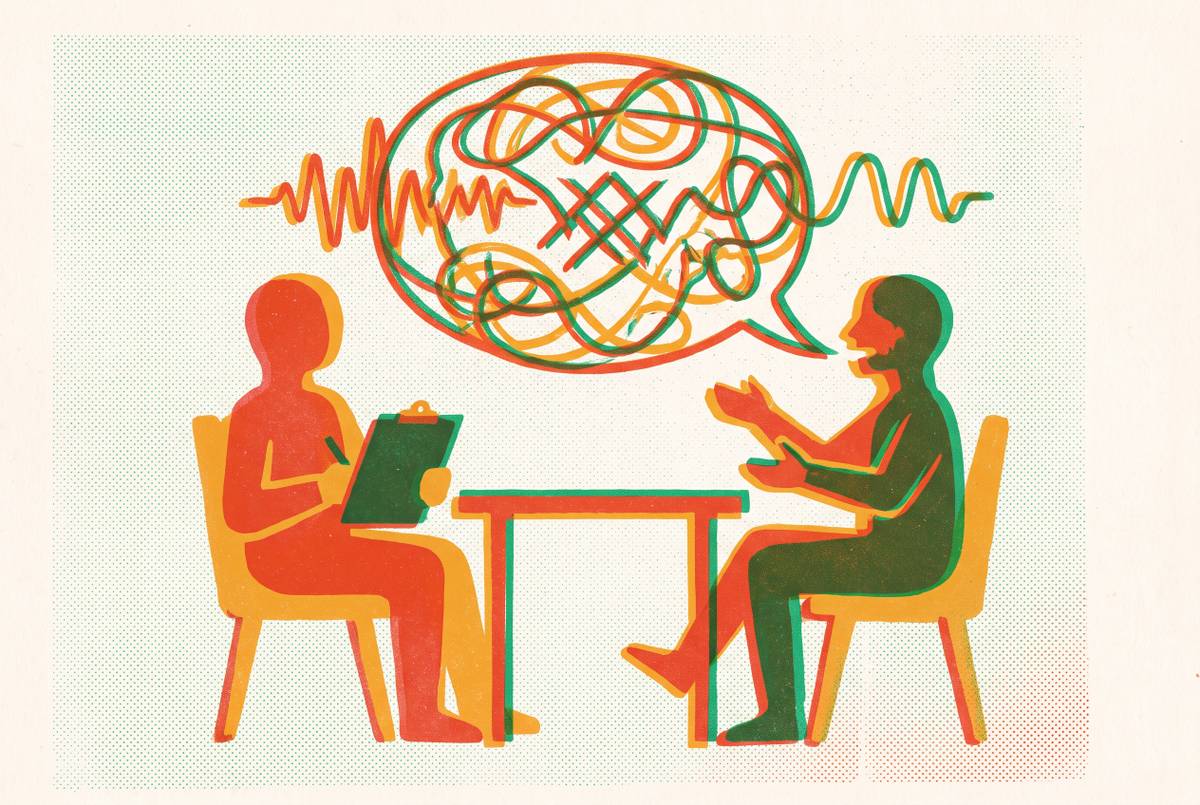
The candidate sits down, shakes hands, and gets the question everyone claims to have an answer for: "Tell me about yourself." What follows, more often than not, is a trainwreck in slow motion, delivered with a smile. This piece is about why that happens and what to do about it: the prompt reads like a request for a summary, but it functions as a test of composure, clarity, and verbal control under mild duress. Most candidates fail it because they prepare an answer to the wrong question. Two failure modes dominate: the rambling autobiography that buries any usable point under a pile of chronology, and the flat recitation of the resume, which tells the panel nothing it couldn't have read on its own. By the time either version limps to a conclusion, the interviewer has already formed an impression, and it was formed in the first thirty seconds, not the last. The distance between an adequate answer and a memorable one is craft: structure, pacing, and a narrative arc that moves somewhere on purpose.
What the panel evaluates in the first two minutes
Interviewers are not grading the content of a self-introduction the way a teacher grades a book report. They are listening for signal: how someone organizes thought on the fly, how they handle a vague prompt, whether their energy reads as calm or scattered. The self-introduction is a compressed simulation of every future meeting that candidate will ever sit in, every client call, every moment of being put on the spot without a script. A 2025 ETS research report frames communication as a "future-ready skill," necessary not just for getting hired but for staying employable as automation reshapes which human capacities still carry a premium. That framing matters because it means the stakes of this one answer extend past the room it's given in. Communication appears as a requirement in nearly every job posting, including technical roles where nobody ever formally teaches it. ISACA's State of Cybersecurity report found that 58% of cybersecurity hiring managers named communication the top soft skill they look for, ahead of critical thinking, problem-solving, teamwork, and attention to detail. That number should unsettle anyone who assumes their work will speak for itself, because the data says the panel is listening for something else entirely before it ever gets to the work.
Verbal performance is a trainable skill, not a personality trait
The obvious objection is that some people are simply good at this and some aren't, the extroverts win and everyone else copes. The neuroscience says otherwise. Donald Hebb's principle of neural plasticity, often summarized as "neurons that fire together wire together," describes how repetition of a verbal response strengthens the specific neural pathway that produces it. Each rehearsal makes the next delivery more automatic and less effortful, the same way a muscle gets stronger because it was asked to lift something before. Deliberate practice also builds myelin around the neural fibers involved, which speeds up signal transmission. This is a large part of why experienced speakers seem to think more clearly exactly when the pressure is highest: the circuitry has simply been run enough times to fire faster. Repeated exposure to practice scenarios builds both automaticity and the ability to generalize a skill across new situations, which frees up working memory for something more useful than scrambling for the next sentence: reading the room. None of this is mysterious or reserved for naturally gifted talkers. It is the identical mechanism behind a free throw shooter's form or a pianist's scales, repetition converting conscious effort into reflex.
The structure that turns a ramble into a performance
A structured answer is not the same thing as a scripted one. Structure is rehearsed architecture, a skeleton sturdy enough that the speaker stops spending brainpower on shape and starts spending it on presence. Practitioners of interview coaching converge on a three-part arc for this exact reason: Present, what the candidate is doing now; Past, how they got there; Future, why the role on the table is the logical next step. That sequence builds narrative momentum instead of dumping a chronological inventory on the interviewer's desk. It also respects a hard timing constraint: the answer belongs under two minutes, full stop, with everything else the panel might want to know surfacing naturally through the rest of the interview. The deeper craft move inside that structure is specificity. "Increased response rates each quarter" lands as a concrete, verifiable outcome. "Improved customer service" is a category with no edges, and categories don't stick in anyone's memory. Specific claims signal a habit of measuring outcomes. At senior levels, the opening should work as a positioning statement, an answer to "who are you and what makes you different," not a timeline of job titles. The structure is the skeleton. What fills it, the details chosen, the outcomes cited, is what makes the answer unmistakably someone's own.
The delivery layer that structure alone cannot provide
A structurally perfect answer delivered badly still loses the room, because delivery is the mechanism that turns structure into presence. A moderate, controlled speaking rate reads as authority, while speaking too slowly reads as uncertainty and speaking too fast reads as anxiety leaking out through the vocal cords. Harvard Business School professor Alison Wood Brooks has shown that reframing pre-performance nerves verbally, saying "I'm excited" instead of "I'm nervous," redirects the same physiological arousal toward better performance. The word chosen to label the arousal changes what the body does next. Visualization deserves equal billing with physical rehearsal because functional MRI studies show mental run-throughs activate the same neuroanatomical networks as the real thing. The brain, to a meaningful extent, cannot tell a vividly imagined rehearsal from an actual one. Finally, posture, eye contact, and facial expression either back up the words being said or contradict them, and a mismatch between the two is what makes a rehearsed answer feel hollow.
Gen Z and early-career candidates face a specific disadvantage here
The communication environment that shaped a generation's habits did not disappear when they walked into a conference room, and that creates a specific, closeable gap for early-career candidates. Many Gen Z professionals grew up communicating in fast, informal digital exchanges built for brevity rather than nuance, which leaves fewer natural opportunities to practice the extended, face-to-face verbal exchange an interview demands. The EDUCAUSE New Managers Institute Competency Assessment found that only 35.8% of early-career professionals agree or strongly agree they feel comfortable navigating difficult conversations, and a scored self-introduction qualifies as exactly that kind of high-stakes verbal moment. This is not a story about diminished intelligence or weaker effort. Elisabeth Kelan of King's College London argues Gen Z simply prefers different communication modes, more comfortable sending an instant message than picking up the phone, which makes the gap modal rather than cognitive: a matter of which channel feels natural, not whether the underlying skill can be built. The practical upshot cuts the other way, favorably, for anyone willing to treat live verbal performance as a discipline worth deliberate practice. Most peers are not doing that; the candidates who do stand out by default.
How scoring and feedback accelerate improvement beyond unstructured rehearsal
Rehearsing in front of a mirror without any measurement mostly reinforces whatever habits already exist, good or bad. Scored practice, with specific dimensions of measurement attached, is what actually produces change. Vague encouragement, the "you were great, just be more confident" variety, does not create a feedback loop. It creates a reassurance loop, which feels good and changes nothing. The dimensions that actually move the needle are measurable: pace, filler rate, structural clarity, conciseness, confidence markers, and vocabulary range, each isolable and improvable on its own terms. Effective feedback targets the specific gap between the vocabulary a candidate recognizes passively and the vocabulary they actually deploy once the pressure is on, which is a narrower and more fixable problem than "communicate better." AI-powered verbal practice tools have started closing that loop without the scheduling friction of a human coach, and the useful distinction among them is between tools that coach delivery, how a person sounds, and tools that coach behavior, what a person says and how they handle the moment itself. Wellspoken, founded in 2025, scores speaking across six dimensions: Structure, Conciseness, Confidence, Pronunciation, Filler Rate, and Pace, delivered on a point scale with a detailed breakdown after each recording, and it tracks hundreds of specific words and professional phrases to close the gap between recognizing good phrasing and actually using it live. Poised runs as a private coach during live online meetings, surfacing real-time cues on pace, energy, filler words, clarity, and interruption patterns, then compiling those patterns into something to practice deliberately over time. The strongest practice model pairs frequent, short, specific scored repetitions with periodic human calibration for the emotional and relational nuance automated scoring cannot fully read. Daily short-form repetition builds the automaticity the neuroscience section describes: the answer becomes reflex, freeing the speaker's attention for the room.
The objection worth taking seriously: structure versus authenticity
The strongest case against all of this goes roughly as follows: heavily rehearsed answers feel formulaic, and once everyone adopts the same three-part arc, everyone starts to sound the same, interchangeable and slightly robotic. Interviewers are trained to spot a polished non-answer, the argument goes, and polish without substance reads as evasive. The objection reflects a legitimate worry about sounding rehearsed. It conflates two very different activities: memorizing a script word for word and internalizing a structure loosely enough to improvise inside it. Those two produce entirely different performances. Structure functions as a container; authentic detail is what actually fills it, and a rehearsed architecture frees a speaker to be more present in the room, not less, because no working memory is being spent hunting for the shape of the answer while the answer is happening. What makes a self-introduction memorable is the specificity living inside it: the concrete example, the honest reason behind a career change, the moment of genuine conviction that a scripted recitation could never fake convincingly. The candidate who has rehearsed enough that delivery has become automatic is the one who can afford real eye contact, can respond to the actual energy in the room, and can let a genuine moment land without losing the thread. The unpracticed candidate cannot do any of that, because they are still searching for words while the moment passes them by. Authenticity in this context is what preparation produces once there has been enough of it that the preparation itself disappears from view.
Treating the self-introduction as ongoing practice, not a one-time fix
The candidates who perform best in these moments are rarely the ones who crammed hardest the night before one particular interview. They are the ones who have made verbal performance a standing practice that any high-stakes moment, interview or otherwise, can simply draw on. The 2025 ETS research report positions communication as foundational to academic achievement, social engagement, and professional success well beyond any single schooling or hiring context, and "tell me about yourself" is just one instance of a skill whose returns compound over an entire career. The self-introduction itself resurfaces constantly: software engineering interviews, data science interviews, program management roles, client pitches, networking events, the list runs as long as a career does, so no rehearsal time spent sharpening it is ever wasted. Daily short-form verbal practice, a single prompt, a recorded response, a score attached to it, replicates the tight feedback loop that produces the automaticity the neuroscience points to.