Toastmasters Alternatives for People Who Practice Solo
Solo practice apps let anxious speakers build fluency before facing a live audience.
Young professionals who want to get better at speaking in public have a real alternative to the weekly-meeting format, and it does not require finding a chapter, keeping a fixed schedule, or speaking in front of strangers on week one. Public speaking ranks as the communication situation Gen Z and millennials find most difficult, ahead of asking for help and ahead of job interviews, and the standard remedy still asks the most anxious person in the room to go first, in person, cold. That is a scheduling problem wearing a confidence costume. Remote and hybrid work has thinned out the local chapters that used to make group practice convenient, so the format that was supposed to be the default on-ramp now asks for more logistical commitment than most early-career schedules can absorb. None of this makes group practice bad. It makes it a poor match for a specific, large, and growing population: people who know they need the reps, tried the conventional path, and found the door locked before they ever got to practice.
The people this affects most are avoiding a format that front-loads the single hardest version of the skill, live audience, unfamiliar faces, no retry, before they have built any baseline fluency to bring into the room. A beginner weightlifter does not start with a max-effort deadlift in front of a gym full of strangers, and nobody would call it a character flaw if they declined to. The mismatch between what group meetings demand and what a beginner can tolerate is structural: group formats require performing in front of strangers from the first session, which most beginners cannot yet tolerate, and treating that mismatch as a motivation problem has sent a lot of capable people home convinced they are simply bad at this.
What Solo Practice Can and Cannot Replicate
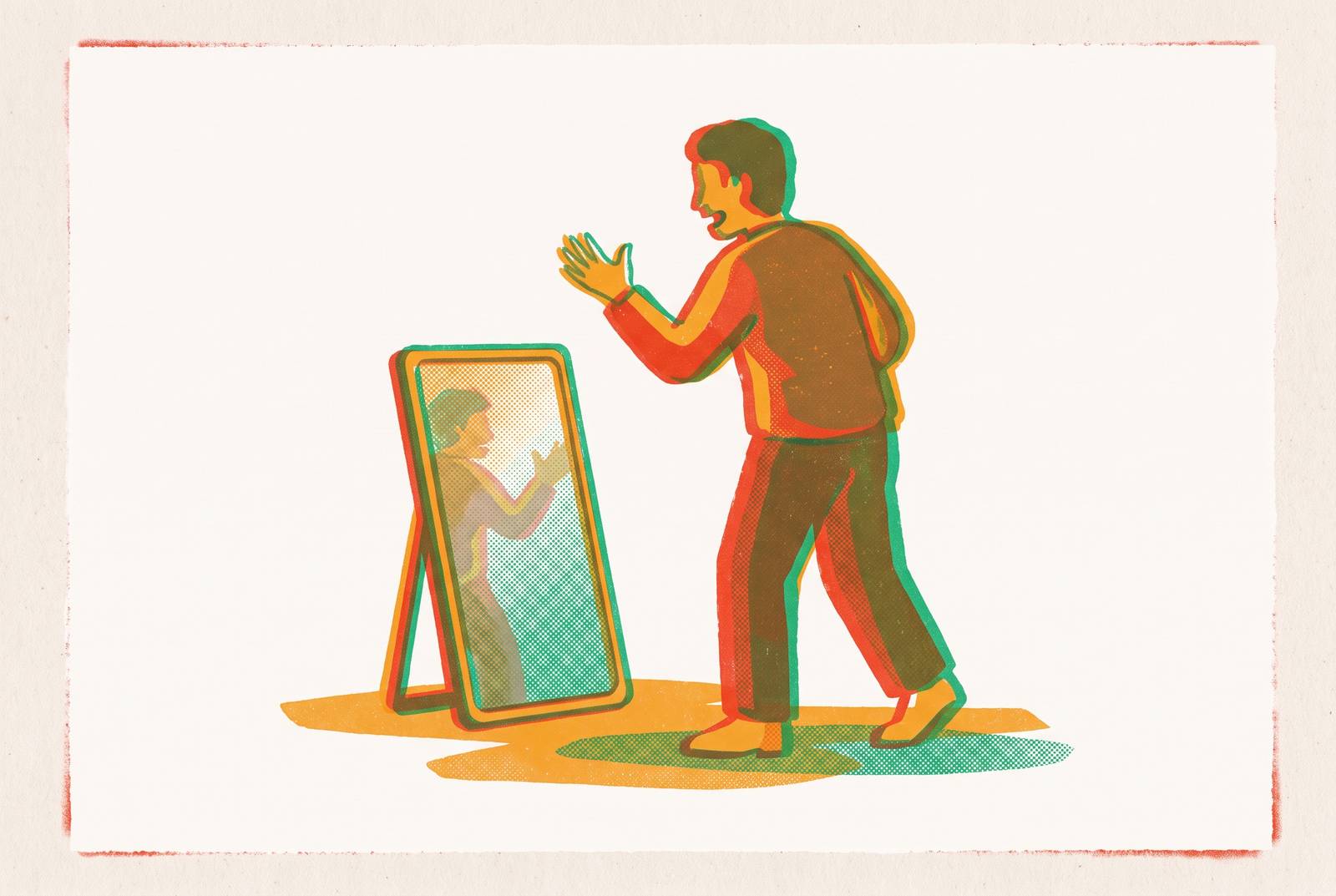
Solo practice will not reproduce the jolt of forty strangers' eyes on you, the way a live room drifts or leans in, or the split-second recalibration that comes from watching a real face react to a real sentence. A phone screen does not get bored. A mirror does not glance at its watch. Any tool claiming to fully replace a live audience is overselling itself, and the honest version of this argument has to concede that gap before it earns the right to make a counterpoint.
Most of what makes speaking feel hard is fluency rather than the audience, and fluency is trainable without one. The subjective sense of confidence tracks closely with how easily a speaker produces language in the moment, so cutting filler words and smoothing out pacing is not a cosmetic fix, it is direct input into the thing people actually mean when they say they feel confident. Most of the high-stakes speaking situations people actually lose sleep over, interviews, hard conversations with a manager, a pitch to a skeptical buyer, are dialogues. The real skill gap in those moments is thinking and talking at the same time under pressure, not delivering a polished script. A tool that only scores how smooth a rehearsed paragraph sounds misses that gap entirely, which is the strongest case against solo AI practice: it risks optimizing the variable that was never the problem. The tools worth using have built unscripted back-and-forth formats that force a speaker to respond to something they did not see coming, which is a much closer simulation of what a live room actually demands.
The friction that keeps anxious speakers from ever starting keeps many from attempting group practice at all, and solo practice with the right feedback loop sidesteps it completely. Tools like Yapp meet people where they already are: one prompt a day, no meeting to schedule, no audience beyond the app's own scoring, which lowers the entry cost for someone who already tried the group-meeting path and bounced off it.
The feedback gap that separates spinning wheels from actual improvement
Doing the same thing over and over without a measure of what changed is not practice, it is repetition of habits, including the bad ones. Recording a rehearsal and watching it back shows surface behavior, a nervous hand gesture, a wandering eye line, but it gives no verdict on whether the next take was actually better, and the speaker ends up grading their own homework with no answer key.
Research in communication education shows that feedback improves performance when it is specific and when the speaker acts on it, not when it is general encouragement or a pat on the back. That is the line that separates an app that tells you "good job" from one that tells you your filler-word rate dropped from eleven percent to six percent since last week. The feedback layer that turns solo practice from circular into structured is an outside measure, pace, filler rate, energy, structure, that catches patterns no speaker can hear while they are mid-sentence and nervous. That kind of quantified, specific signal separates vague self-awareness from measurable improvement, and a tool offering a real score beats a tool that just offers a recording.
A second, rarer kind of feedback targets not delivery but response: practicing how to think on your feet when the input is unpredictable, which maps far more closely onto what a tense meeting or an interview actually requires than any monologue drill does. This is the fork in the road that explains why the tools in this space look so different from one another. Some measure how a sentence sounds. Some simulate a live back-and-forth. Some teach the underlying technique before ever asking the user to perform it. None of these approaches is wrong, but none of them solves every gap, and picking the wrong one for your actual problem produces the same stalled-out feeling as talking to a mirror.
Mapping the Current Tool Landscape to Training Needs
The apps available in 2026 split along the gaps described above, and treating them as interchangeable wastes time on the wrong problem.
For speakers who already know what they want to say and need to clean up how they say it, delivery-mechanics apps give the fastest, most direct read on pacing and filler words. Preply has noted that this category of app works well as a daily practice companion on both iOS and Android, fitting a short session into a commute or a lunch break, which fits the use case of someone polishing a specific upcoming talk rather than rebuilding their speaking habits from scratch.
For speakers chasing voice, tone, and presence beyond filler-word counts, Vocal Image offers a structured daily plan built around articulation drills, short audio lessons, video coaching, and progress tracking. It runs on both iOS and Android and is built less around one looming speech than around steady gains in everyday conversation, a slower, more compounding kind of improvement.
For speakers who want a full picture rather than a single metric, Wellspoken scores every session across six dimensions, structure, conciseness, confidence, pronunciation, filler rate, and pace, with the sub-metric weights published in full. Its eight-unit curriculum and drill library were written by a speech and communication coach with a background in drama, performance, and production. The app records calls up to two hours long with speaker isolation, runs on iOS, Android, macOS, and web, and a typical session takes five minutes on a phone. Its value only shows up if the habit survives a busy week, since a five-minute session skipped three weeks running tells you nothing.
For speakers whose actual gap is thinking under pressure rather than polishing a script, dialogue-simulation tools are built for the job delivery apps cannot do. Orator was ranked first in a roundup published in October 2026, and its live AI roleplay asks unscripted follow-up questions instead of cycling through preset responses, which makes it useful for interview prep and hard conversations that a monologue app cannot rehearse. Insight7's AI Coach works similarly: pick a scenario, job interview, salary negotiation, sales pitch, a difficult feedback conversation, and the AI plays the other person while the user has an actual back-and-forth. Feedback covers what was said, how it was said, and what got missed entirely, which makes it a strong fit for beginners prepping for interviews, though a monologue-focused delivery app will still give faster feedback on pure speaking mechanics for a one-directional speech.
For speakers whose real obstacle is physiological, the adrenaline spike of being watched, VirtualSpeech uses a VR headset (Meta Quest, Pico, or VIVE) to put a speaker in front of virtual audiences ranging from small meeting rooms to larger venues. The environment tracks eye contact and the virtual audience reacts to delivery, a layer of pressure simulation nothing else in this list offers, though it only delivers full value if the user owns or can access a headset.
For speakers who need external accountability more than a new skill framework, TalkStride runs one shared 60-second challenge a day with a friends leaderboard and free delivery feedback on every rep, covering pace, pauses, filler words, clarity, and monotone, across five modes: Daily, Practice, Vocabulary, Social, and Interview. The TalkStride team describes it as built for a daily speaking habit that actually sticks, with a free challenge available every day and pricing listed on its own landing page.
And for speakers who have hit the ceiling of what a score can tell them, Preply's 1-on-1 tutoring marketplace connects users with public speaking coaches, communication professors, corporate trainers, and former diplomats among them, who watch delivery in real time and adjust the curriculum as the speaker improves. Entry-level sessions are accessible in price, most coaches charge mid-range hourly rates, and a trial lesson is available before committing. The tradeoff is obvious: scheduling and cost, both higher than a monthly app subscription, in exchange for judgment no algorithm currently offers.
Two names belong on this list as warnings rather than recommendations. Poised shut down on October 8, 2026, after offering invisible coaching during live video calls on desktop only, with no practice drills of its own, a fact stated on its own homepage. LikeSo, which focused narrowly on filler-word reduction, was removed from the App Store as of September 18, 2026. Neither is worth a new subscription.
The tightest feedback loops in this whole landscape come from apps built around daily, unscripted practice. Yapp's single-prompt-per-day model treats communication as a repeatable athletic skill rather than a once-a-month fire drill, generating a volume of deliberate, scored practice that most speakers never otherwise get. Most people put together one presentation a month. Few put together one every day.
How to match your current gap to the right starting point
A tool is not a training plan, and the wrong tool for the wrong gap produces the same stalled-out feeling as rehearsing alone in a mirror. Picking the tool that fits the specific gap is what turns practice into improvement, rather than just picking the single best-reviewed app on the list.
Three questions narrow the field fast. First, is the gap in delivery, how you sound, or in thinking, what you say under pressure? Delivery gaps call for feedback tools; thinking-on-your-feet gaps call for dialogue simulation. Second, is there a specific event on the calendar, or is this a long-term habit you are building? Event-driven prep favors tools with fast, immediate feedback loops, while habit-building favors structured journeys and daily challenges built to be repeated for months. Third, is the underlying problem physiological, nerves, adrenaline, freezing up, or technical, pacing, word choice, structure? Physiological responses need exposure to real or simulated pressure, which only VR or live practice can approximate. Technical problems respond to straightforward feedback tools.
Most solo practitioners will need more than one tool as they progress, because the gap changes as they improve. A beginner might start with a delivery-feedback app to surface basic habits, filler words, pace, energy, add a dialogue simulator once that foundation is steady, and eventually bring in human coaching for the kind of nuanced judgment no algorithm currently offers. The single variable that predicts whether any of this works is whether the app actually gets opened. A slightly less sophisticated tool used every day will outperform the most celebrated app touched once a month, every time.
Daily Short-Form Reps vs. Occasional Long-Form Prep
Five minutes of practice every day will outpace two hours of rehearsal crammed into the week before a big presentation, because verbal fluency is a function of how many reps a speaker logs across time, not how hard any single session pushes.
The comparison to athletic training holds up under scrutiny: no coach builds endurance off one long run a week, and no speaker builds fluency off one long rehearsal a month. The feedback loop has to close on each individual rep, not once at the end of a month, because a speaker who does not know whether yesterday's attempt was better or worse than today's has no way to adjust. A single number that moves session over session gives a concrete signal that vague encouragement cannot match. Watching a score climb is what keeps someone opening the app on day eleven when day one's novelty has worn off.
Confidence and eloquence compound. Each rep that lands slightly better than the last one raises the floor the next rep starts from, and that compounding effect is only available to the person who shows up again the next day. That is the case for daily, short-form practice over occasional marathon prep, and a tool like Yapp is built on the same premise: one prompt a day, a score attached to every attempt, and eloquence treated as a stat that goes up when the reps go up.