Phone and Video Interview Communication Differences
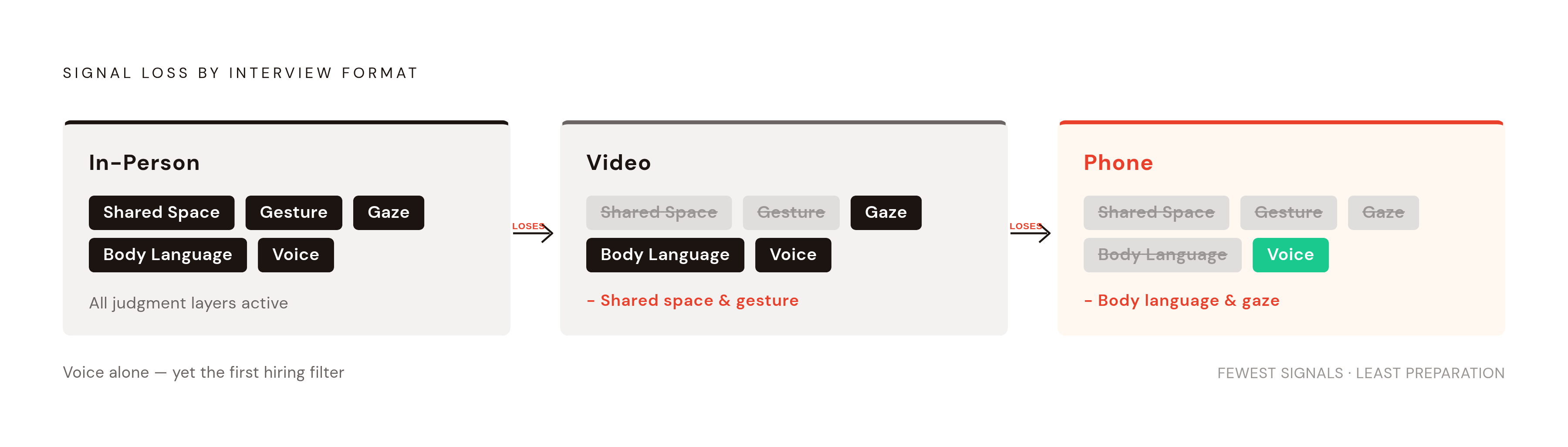
Each format strips away different communication layers, forcing different skills.
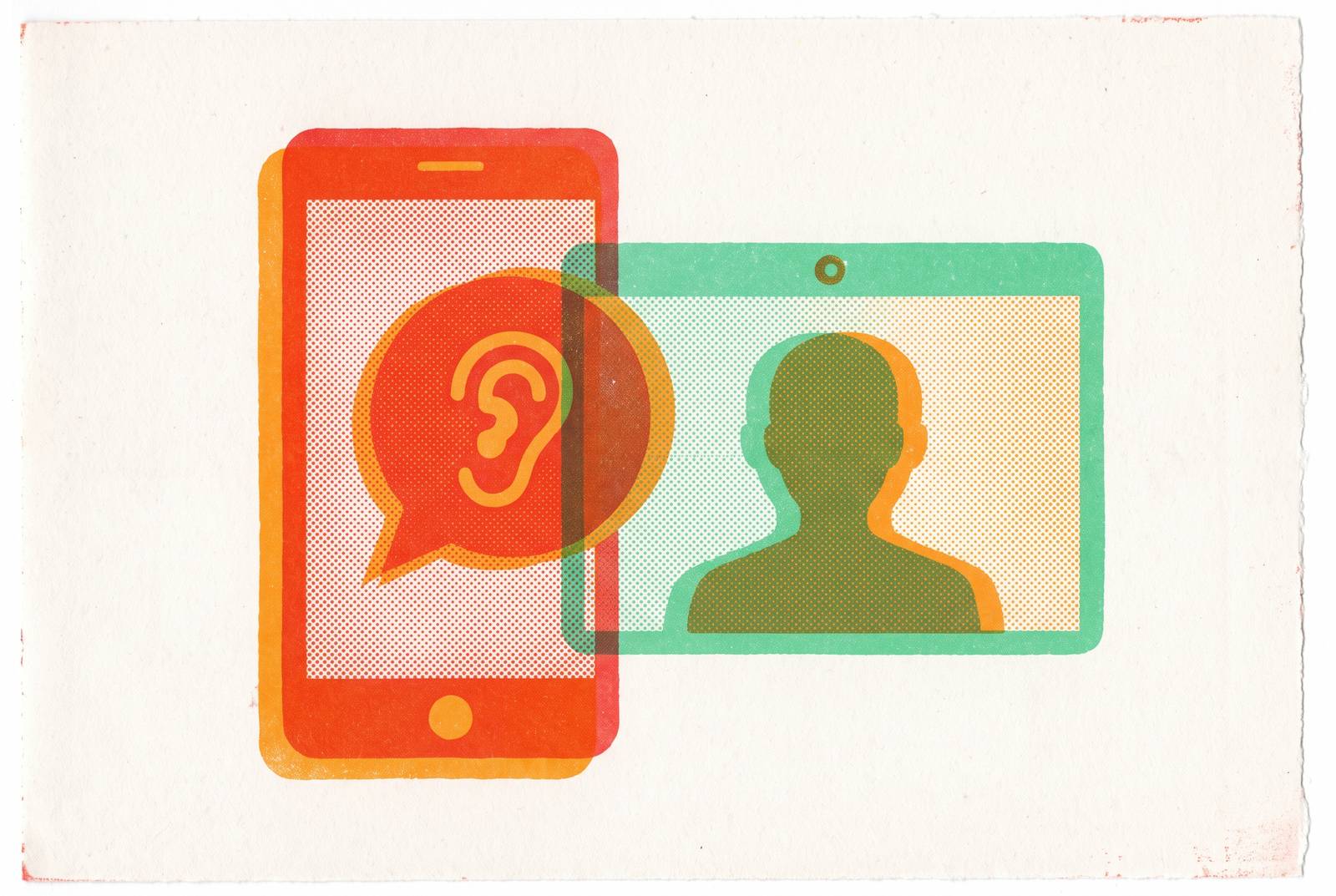
Roughly 30.89% of interviewees end up with a job offer, which means the format standing between a resume and that number matters more than most candidates admit. Phone and video interviews measure different things, yet most candidates prep as if the only variable is whether the camera is on. That's a mistake worth unpacking, because face-to-face interviews sync a candidate in both time and space, video only syncs time, and phone strips out the visual channel entirely. Each shift adds or removes a layer of communication the candidate has to manage, and understanding which layer is missing tells you exactly what to practice.
How the visual channel changes what an interviewer can actually assess
Turn the camera on, and appearance starts talking before the candidate does. This runs against the common assumption that seeing someone gives you more to go on. It gives you more, sure, but more of the wrong thing. One visible cue, calm posture, a steady gaze, colors the interviewer's entire read of competence. That's the halo effect, and an analysis pulling together dozens of studies found that professional appearance and confident body language rank among the strongest predictors of interview success, right up there with what the candidate actually says.
Research has put numbers on the specific failure: a large majority of hiring managers named poor eye contact as one of the most common nonverbal mistakes, and a majority said they'd pass on a candidate who avoided it. That shorthand carries little weight on a phone call, where there's no posture to misread, no gaze to avoid, nothing but a voice coming through a speaker. Video adds a channel of communication and, with it, a whole arena of judgment that phone interviews rarely touch.
The eye-contact paradox that video creates
Here's the trap built into every video call: to look like you're making eye contact, you have to stare into the lens, not at the interviewer's face on your screen. Every instinct fights this. The brain wants to look at the person talking, and the person talking is rendered a few inches below the camera, so the natural pull is downward, away from the exact spot that would read as eye contact on the other end.
The cost is measurable. Averted gaze in video settings lowers perceived empathy, trust, and emotional closeness, and a 2024 study in Scientific Reports found actual evaluation scores dropped when candidates looked away from the camera during simulated interviews. Layer on the fact that most video setups frame only head and shoulders, cutting off the hand gestures and shifts in posture that carry meaning in person. Stanford researcher Jeremy Bailenson has pointed out that physical movement is tied to better cognitive performance, and video interviews eliminate most of it by design. You're sitting still, boxed into a rectangle, trying to think clearly while your body is told to stay put.
Phone interviews carry less of this baggage. A candidate can pace, gesture, close their eyes to think, whatever helps, since nobody's watching. That freedom may actually support clearer thinking, which flips the usual assumption that video is the more natural format. Camera placement, then, is a prep variable in its own right, worth rehearsing deliberately. Candidates who haven't rehearsed on-camera eye contact are training for a different test than the one they'll sit for.
Why video calls are cognitively heavier than phone calls
A landmark Stanford study found that people performing a task over audio only did better on a secondary task than people doing the same task over video. The gap came down to cognitive load: video simply demands more processing to interpret.
What does that load look like in an interview? A candidate on video is watching their own face in the little self-view window, exaggerating nods to signal agreement that would register as a subtle head tilt in person, and trying to hold eye contact with a lens instead of a face, all while building an actual answer in real time. A 2024 meta-analysis in ScienceDirect backed up this pattern across multiple studies. Separately, 61% of remote workers report feeling drained after back-to-back video meetings, and that fatigue compounds, which an interview's stakes can accelerate fast.
Phone calls strip the visual channel out entirely, so all the cognitive horsepower goes toward verbal content and voice, the exact place where deliberate practice pays off cleanly and quickly. A candidate who hasn't specifically trained for video's overhead is running the same race with extra weight strapped on that they never trained with.
What phone interviews measure that video cannot
No visual channel means every judgment comes from voice alone: pace, tone, clarity, word choice, how much filler creeps in, whether the person sounds like they're thinking on their feet or reciting.
That's verbal fluency, the cognitive ability to pull the right word out and produce it fast, tied to memory, semantic knowledge, and executive control, and researchers link it to fluid intelligence more broadly. In a phone screen, precise word choice cuts down on misunderstanding, quick retrieval lets a candidate shift their language to match the interviewer's tone, and smooth delivery reads as confidence even with no face to back it up.
A 2022 study in SAGE Open, led by Lindsay, compared Zoom and phone interviews and found something worth sitting with: camera-off Zoom calls produced fewer sub-themes in candidate answers than either camera-on video or phone did. Phone interviews pulled more verbal depth out of participants than the camera-off condition managed. That's counterintuitive if you assume video is always the richer format, but it tracks with the idea that when voice is all you've got, how something is said carries as much weight as what's said. Candidates who lean on visual charm or body language to paper over thin answers have nowhere to hide on a phone screen. The words have to do all the work.
How telephobia is making phone interviews the unexpected weak spot for younger candidates
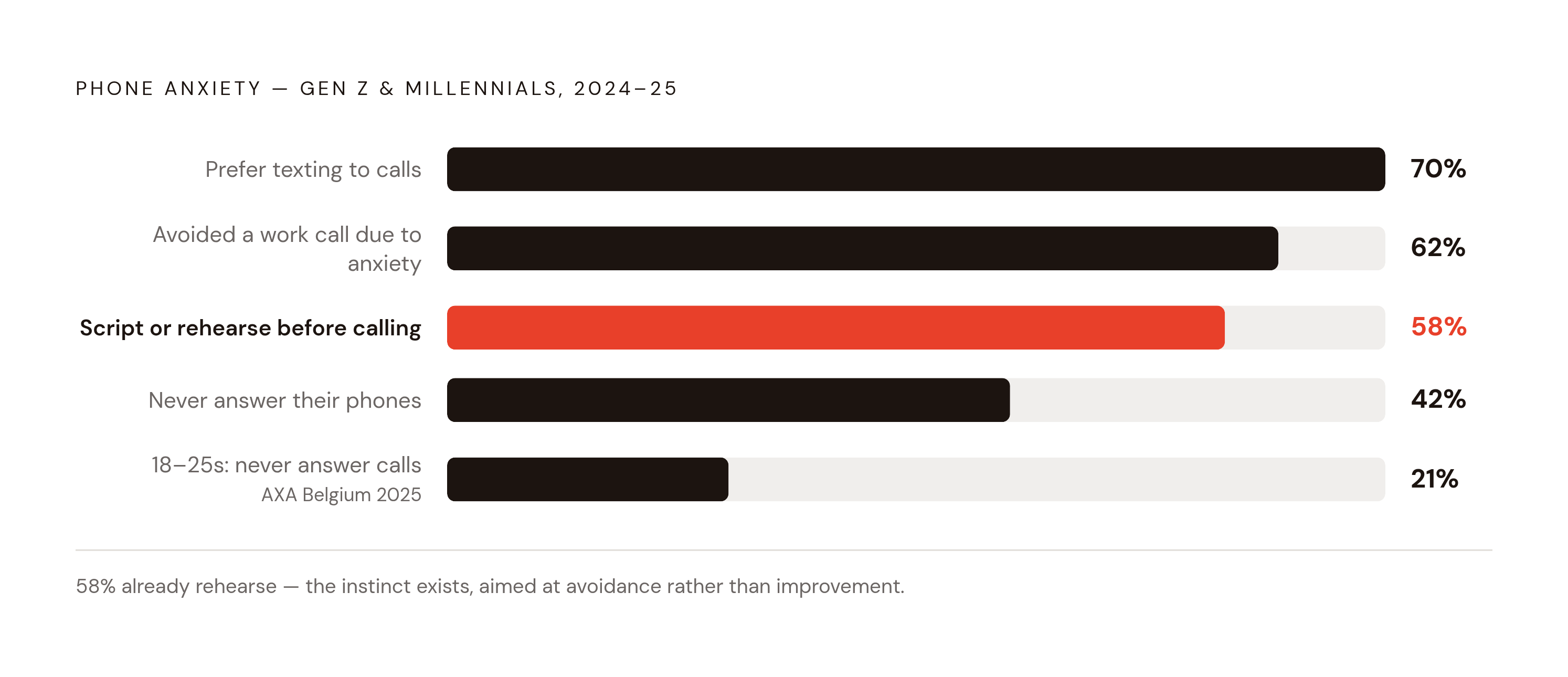
Telephobia isn't a joke term. A 2024 Uswitch survey of 2,000 UK adults found roughly 70% of 18 to 34-year-olds preferred texting to talking on the phone, and somewhere between 23% and 25% admitted they never pick up calls at all. Separately, 42% of Gen Z and millennial respondents said they never answer their phones, and 58% script or rehearse what they're going to say before making a call. That last number is the tell: unscripted, real-time verbal performance is genuinely foreign territory for a huge chunk of the workforce entering the job market right now.
Face for Business UK found in 2024 that 62% of employees had avoided a work call in the past year because of anxiety about it. AXA Insurance Belgium's 2025 study found 21% of 18 to 25-year-olds never answer phone calls, period. The explanation isn't mysterious: an entire generation grew up on asynchronous communication, texting, DMs, voice notes, formats that always leave a beat to think before responding and a delete key if the first draft doesn't land. A live call has neither pause nor edit, and the format that feels most old-fashioned turns out to be the one stripping away every advantage digital-native communicators have built their whole lives around.
The consequences show up in hiring pipelines directly. Educators report college students "falling at the hurdle" of phone screenings, often for lack of practice and confidence on a live call rather than for lack of qualification. The UK's Office for National Statistics scrapped a chunk of its phone-based data collection, a signal of how unreachable younger respondents have become by phone. And phone screenings are usually the first filter in a hiring process, the gate before the gate. The format that feels the most casual, the "quick call" a recruiter slots in before the real interview, is quietly the hardest one for a growing share of candidates.
First impressions land differently depending on the format
The British Psychological Society found that 60% of hiring decisions get made within the first 15 minutes of an interview. Fast, and mostly locked in before the candidate has said much of substance.
On video, that window is dominated by what the camera shows before a word is spoken: lighting, background clutter, posture, whether the eyes meet the lens or dart somewhere else. On phone, the first impression comes from the opening sentences, the pace of the greeting, whether the voice sounds settled or rushed, how the first answer is structured. Verbal signals carry the weight in a phone screen, since content is all there is.
Both formats compress judgment into a tight window, but the inputs feeding that judgment are entirely different. Rehearsing a strong video opening, controlled background, camera at eye level, composed expression, does almost nothing to prepare a strong phone opening, and the reverse holds too. Picture a candidate who's polished their on-camera intro to a shine but hasn't worked on sounding grounded and unhurried in audio alone. They might ace the video round and then stumble in the phone pre-screen that came before it, the one nobody thought to prep for because it felt like the easy part.
Preparing specifically for the format you're actually facing
Phone prep centers on voice and verbal fluency, full stop. Answer practice prompts out loud, not in writing, not silently in your head, so word retrieval gets fast and delivery becomes automatic rather than effortful. Record yourself and actually listen back. Pace, filler words, and muddled structure are audible the second you hear a recording, even though they feel invisible while you're mid-sentence. Every phone call made before the actual interview is a rep. The 58% of young people who script calls in advance already have the right instinct, they're just aiming it at avoiding the call instead of getting better at it. Short daily verbal practice, answering one prompt out loud, reviewing it, adjusting, repeating, is the training loop that builds the fluency phone screens expose.
Video prep centers on managing cognitive load and visual presence, a different problem entirely. Camera placement at eye level matters, with the lens as the focal point during answers instead of the interviewer's face on-screen. Rehearse on camera specifically, because watching yourself talk is a different experience from just talking, and candidates who skip this step carry a brand-new stressor into the real interview that they've never dealt with before. Simplify the environment, fewer things to manage in the background means more mental capacity left over for the actual conversation. And practice sitting with silence: video interviewers nod less, react less visibly, and pause longer because of latency, and candidates who haven't trained for that silence tend to fill it badly, rushing to rescue a pause that didn't need rescuing.
Knowing which format is coming a week out is enough time to shift where the prep energy goes. Treat both formats identically, and there's a real gap in readiness sitting there unaddressed. Tools built around daily verbal practice, recording a response, hearing it back, getting structured feedback on it, target exactly the skill both formats eventually test: communicating clearly under pressure, in real time, with nothing to hide behind.