Situational Confidence vs General Confidence in Speaking
Specific practice in high-pressure speaking situations beats generic confidence work.
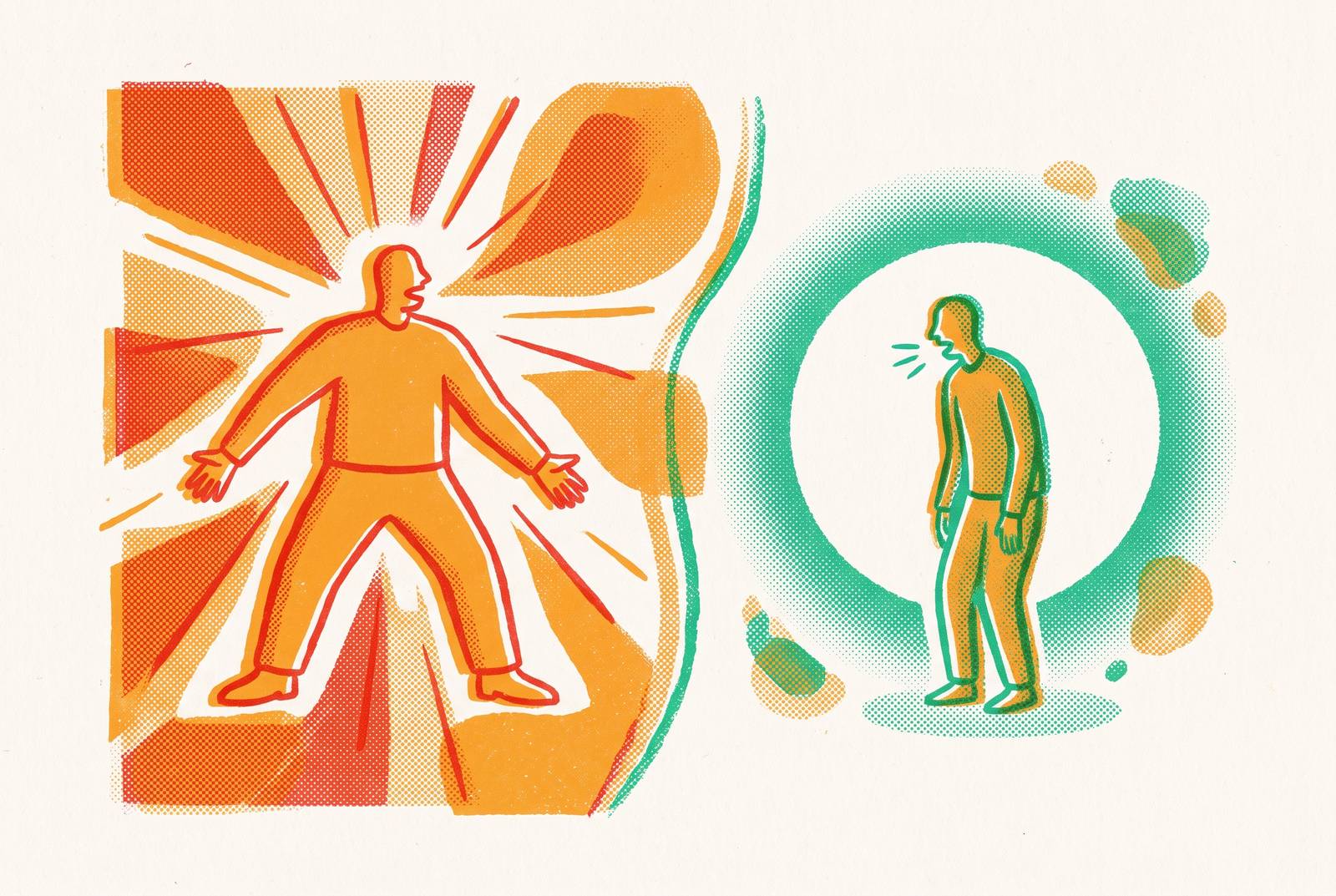
There is a particular kind of person who walks into a boardroom with a clear head and leaves it having said nothing. The same person negotiates fearlessly in a chat window, edits an email to a razor's edge, and thinks fast in a one-on-one. Then someone turns on a camera or hands over a microphone, and the fluency vanishes. The problem is not a lack of confidence. It is a lack of confidence in that specific situation.
Why general self-confidence and speaking confidence are not the same thing
General self-confidence and situational speaking confidence are genuinely different psychological constructs, and conflating them is why most advice about public speaking fails to produce real change. Public speaking anxiety is recognized as a situation-specific form of communication apprehension, with cognitive, behavioral, and physiological components that interact only under particular conditions: an audience paying attention, stakes attached to the outcome, words delivered in real time with no edit button. None of those conditions are touched by generic self-esteem work.
A person can hold stable, genuine self-belief about their intelligence, their values, and their worth, and still freeze the moment a room goes quiet and the eyes turn expectant. The freeze is not a crisis of identity. It is a crisis of situational readiness. The brain has not automated this particular performance in this particular context, and no amount of interior affirmation convinces a system that learns through exposure.
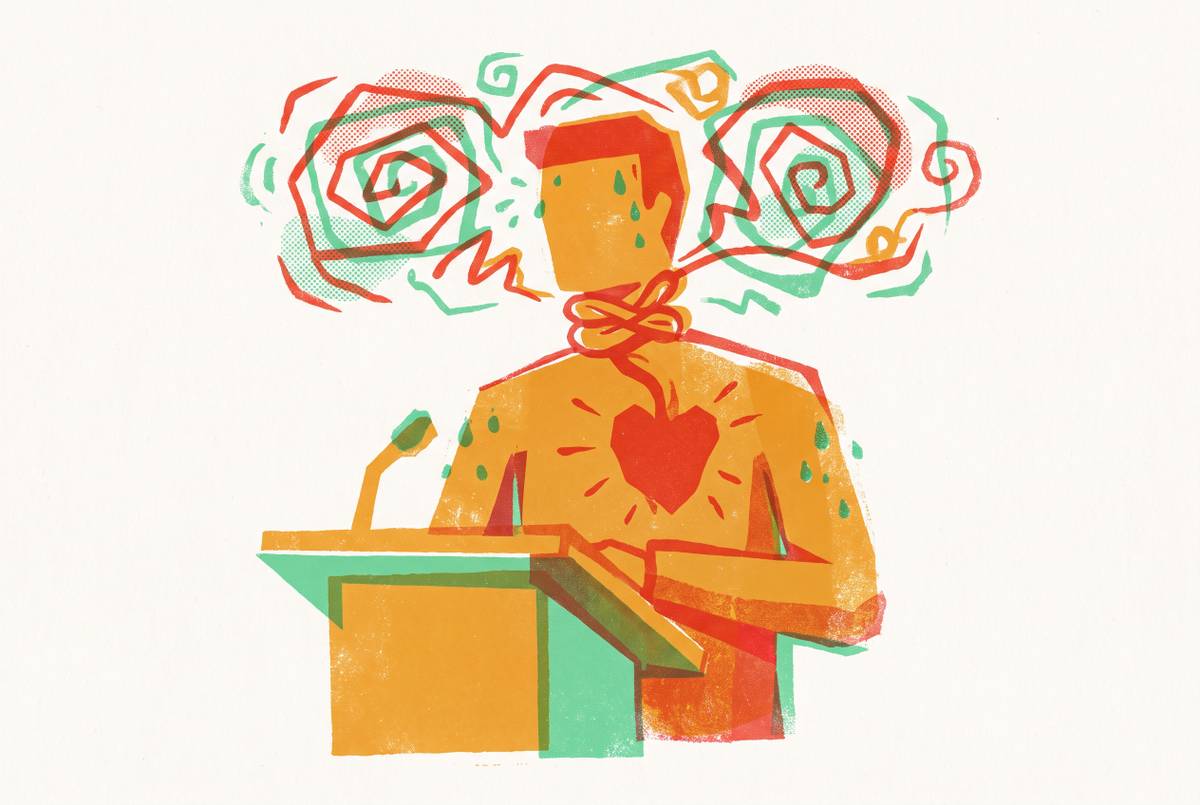
What intensifies public speaking anxiety are the variables of the moment: audience size, engagement level, environmental pressure, and the perceived stakes of failure. These are external conditions with physiological consequences. A person who believes in themself is not insulated from a racing heart and a blanked retrieval system. They are simply someone whose general confidence never got the memo about this room, this audience, and this deadline.
How the brain builds confidence inside a specific situation
Situational confidence grows as specific speech acts become automatic, not as global self-esteem rises. That is the uncomfortable truth behind every failed attempt to think one's way out of a fear of speaking. The path runs through repetition and feedback, not affirmation, because fluency and confidence reinforce each other at the neural level. Controlled repetition under time pressure reduces hesitation, aids lexical retrieval, and automates speech, which lowers the cognitive load that anxiety feeds on.
This is a mechanical problem with a mechanical solution. The most prominent fear in speaking situations, losing words or forgetting lines mid-sentence, is a fluency problem, not a confidence problem. Nobody has ever recovered from that failure by believing harder. The system needs the retrieval pathway driven deep enough that it fires under pressure, and that happens through repeated activation, not through emotional management.
Confidence does play a genuine role, but it works as a protective mechanism rather than a foundation. Research on confidence and worry in public speaking anxiety shows that positive expectations about speaking ability lead to adaptive coping strategies. A speaker who expects to manage the situation reframes it as manageable. A speaker who expects to collapse treats it as a threat, and the threat response then produces the collapse. The expectation becomes the outcome.
The Pygmalion effect applies internally with remarkable consistency. Research on public speaking anxiety and the Pygmalion effect, conducted with 204 undergraduates from a university in Selangor, found that learners who expect to perform poorly behave in ways that confirm that expectation. Belief in a specific situation is self-reinforcing in both directions. This is why tools like Yapp, a mobile AI speaking coach that delivers one daily prompt with an instant 0 to 100 score, operate on the principle that specific speech acts become automatic through consistent, measured practice rather than affirmation alone.
Why Gen Z and millennials face this as a generation-wide situational gap
The digital-first communication environment that shaped Gen Z did not create a generation of low-confidence people. It created a generation whose confidence is context-dependent in ways previous generations never had to manage. Most Gen Z communication has happened through text, social media, and messaging: platforms that allow editing, deleting, and crafting before sending. Real-time voice removes that control entirely, and the removal registers as threat rather than inconvenience.
The phone data is stark. Research on Gen Z phone communication finds that a large majority report actual anxiety, not just discomfort, about speaking on the phone. The same people who can hold five simultaneous text conversations at high velocity will schedule a call and then dread it for days. The issue is not that the skill is missing. It is that the skill has simply never been asked to perform without a backspace key.
The pandemic compounded this structurally. If you were in early high school when lockdowns began, you largely missed the hallway conversations, lunch table dynamics, and spontaneous social reading-the-room that previous generations absorbed without noticing. A majority of Gen Z report feeling they had to relearn social skills after pandemic restrictions lifted. The compounding worked in one direction: each quiet year added more avoidable situations, and each avoided situation became another unbuilt neural pathway.
This is a register gap as much as a skill gap. Research cited in Fortune found that the vast majority of Gen Z workers report generational differences in workplace language as a challenge. They are confident in some communication contexts and not in others. That unevenness, confidence here but not there, is the definition of situational confidence playing out at scale. The problem is not a deficit of nerve. It is a set of unpracticed situations.
What is actually at stake when situational speaking confidence is missing
The cost of a situational speaking gap is not abstract. It shows up in promotions not earned, opportunities not taken, and relationships not changed, and it compounds the longer avoidance remains the strategy. Every phone call dodged, every meeting where nothing is said, every question swallowed is a missed repetition. The gap between those who practice and those who avoid widens every day, and it widens silently.
Avoidance feels neutral. It feels like deferring discomfort to a later date. It is not neutral. The person who never speaks up in meetings is building the habit of not speaking up in meetings, and that habit then travels to negotiations, interviews, and difficult one-on-one conversations. The situation does not improve by waiting. Waiting is practice in the wrong direction.
The costs show up in the most consequential places. A salary negotiation requires real-time voice under pressure. A job interview requires retrieval under observation. A difficult conversation with a partner requires presence during emotional escalation. People stay in bad jobs and bad relationships not because they lack conviction, but because conviction is only half the equipment. The delivery system has not been built, and the stakes of building it live-test are too high.
Why deliberate, situation-specific practice is the only thing that closes the gap
The only way to build confidence inside a specific high-stakes situation is to practice that situation repeatedly, under real conditions, with feedback that identifies what is actually going wrong. Everything else is preparation theater: reading about body language, drafting opening lines, visualizing success. None of it survives contact with a live audience and an empty head. The system learns by doing the thing, in the conditions where the thing must be done.
Repetition without feedback does not improve performance. It reinforces existing habits, including the bad ones. Research on public speaking improvement shows that single-day awareness programs create insight but not durable habit change. Awareness is cold comfort at the moment of freezing. What changes behavior is repetition with correction, the same loop that builds any skilled performance.
South Western Railway's case is instructive here. When Keeley Quinn, Apprenticeship Compliance Manager at South Western Railway, noticed Gen Z apprentices defaulting to texts over real-time interaction, the solution was not a confidence seminar. It was improv training workshops run by The Free Association, an improvisational theatre company that put the apprentices through unscripted scenarios and role-playing exercises. The unscripted part was the point. Real-time communication only improves under real-time conditions.
Sports participation offers a parallel data point. A 2026 study of pre-service teachers found that students who engaged in sports reported greater enjoyment of public speaking and lower anxiety. The effect does not come from sport teaching speaking. It comes from sport building tolerance for performance pressure and real-time commitment, the exact capacities that speaking demands and that text-based communication never exercises.
How to choose a practice format that actually builds situational confidence
Not all practice formats are equal on the dimensions that matter. The question is whether a format delivers repeated voice-based repetitions in specific simulated situations with scored, actionable feedback. Most popular options fail at least one of those tests. A format that offers encouragement without feedback, or feedback without voice, or voice without repetition, is only partially building the skill.
Yapp is built specifically around the daily repetition model: one prompt a day, spoken aloud, scored 0 to 100, creating the tight feedback loop that deliberate practice requires. The score replaces vague encouragement with a number, the same function a coach's stopwatch serves in athletic training, so progress is visible and specific rather than merely felt. The voice-only format enforces the irreversibility that makes practice transfer to real situations: no editing, no drafting, just the spoken attempt under the same conditions as a real conversation or presentation. Daily short-form practice over time beats occasional long-form preparation, which is exactly what Ericsson's deliberate practice framework predicts will build durable automaticity. The App Store rating of 4.9, with over 500 people already practicing as of the Yapp site, reflects that fit.
Structured improv training, the live group format used at South Western Railway, scores high on situation-specificity and real-time commitment. It builds tolerance for unscripted performance faster than almost anything else. Its limits are access and scheduling: it is an occasional intensive, not a daily practice, and the quality of feedback depends heavily on the individual coach.
Storytelling-based practice groups, including spoken word and narrative workshops, work as a confidence scaffold because narrative structure reduces cognitive load during delivery. Knowing where the story goes frees up bandwidth for how it is told. The weakness is frequency: these groups meet occasionally, and the feedback tends toward encouragement rather than measurement. They work best combined with a daily individual practice tool.
App-based language and speaking platforms represent a broad and uneven category. Research on SFL-Apps, conducted with 100 students, found significant improvements in public speaking skills and self-confidence when apps combined interactive, adaptive features with psycho-emotional support. What matters is whether an app includes scored feedback and voice-specific practice, or falls back on reading, listening, and text-based exercises. The latter builds comfort with the platform, not with speaking.
Building a daily practice habit that targets your specific hard situations
The most effective starting point is not "practice speaking more." It is identifying the two or three specific situations where confidence collapses, and engineering daily repetitions that simulate exactly those conditions. A person who freezes in salary negotiations is not helped by practicing wedding toasts. The practice must map to the situation that matters.
Common high-stakes categories from the research are public speaking to a group, asking for something such as a raise or a favor, job interviews, and difficult one-on-one conversations. Each has a different cognitive and physiological profile. Each benefits from targeted practice rather than a generic speaking routine. The person avoiding a manager conversation is practicing a different skill than the person avoiding a podium.
The principle of progressive challenge applies. Start with lower-stakes simulations of the target situation: a recorded solo prompt. Then move toward conditions closer to the real thing: a live prompt with an audience, a timed response with no retakes. Each step increases pressure while keeping failure cheap. Feedback on each attempt should be specific enough to act on, such as a score, a noted hesitation pattern, or a flagged filler word. General encouragement is what allows avoidance habits to survive even a practice routine.
Daily cadence matters more than session length. The neural automatization that produces situational confidence is built through frequency, not occasional marathon sessions, the same logic that makes daily athletic training more effective than a single long workout. And AI-assisted voice practice can replicate the conditions of real facilitation without the social stakes of a live audience. The AI-facilitated training study found the majority of participants endorsed voice as the correct modality despite initial resistance, and the discomfort of the format is part of what makes it work. The right rep, taken today, is worth more than the perfect plan for someday.
Sources
- Effectiveness of SFL-Apps in Improving Students' Public ...
- An examination of pre-service teachers’ public speaking attitudes with respect to sportive activity and demographic variables
- Investigating Public Speaking Anxiety and the Pygmalion Effect
- (PDF) The Influence of Confidence and Worry on Fear of Public Speaking: A Pls-Sem Analysis
- (PDF) Strategies and Techniques for Building Confidence When Public Speaking for Beginners
- (PDF) DEVELOPING SPEAKING FLUENCY, CONFIDENCE, AND WILLINGNESS TO COMMUNICATE THROUGH 4/3/2-BASED BOOK-SPEAKING ACTIVITIES AMONG JAPANESE EFL LEARNERS