Pronunciation and Accent Improvement Apps
These apps split into surgical drilling versus immersive conversation.
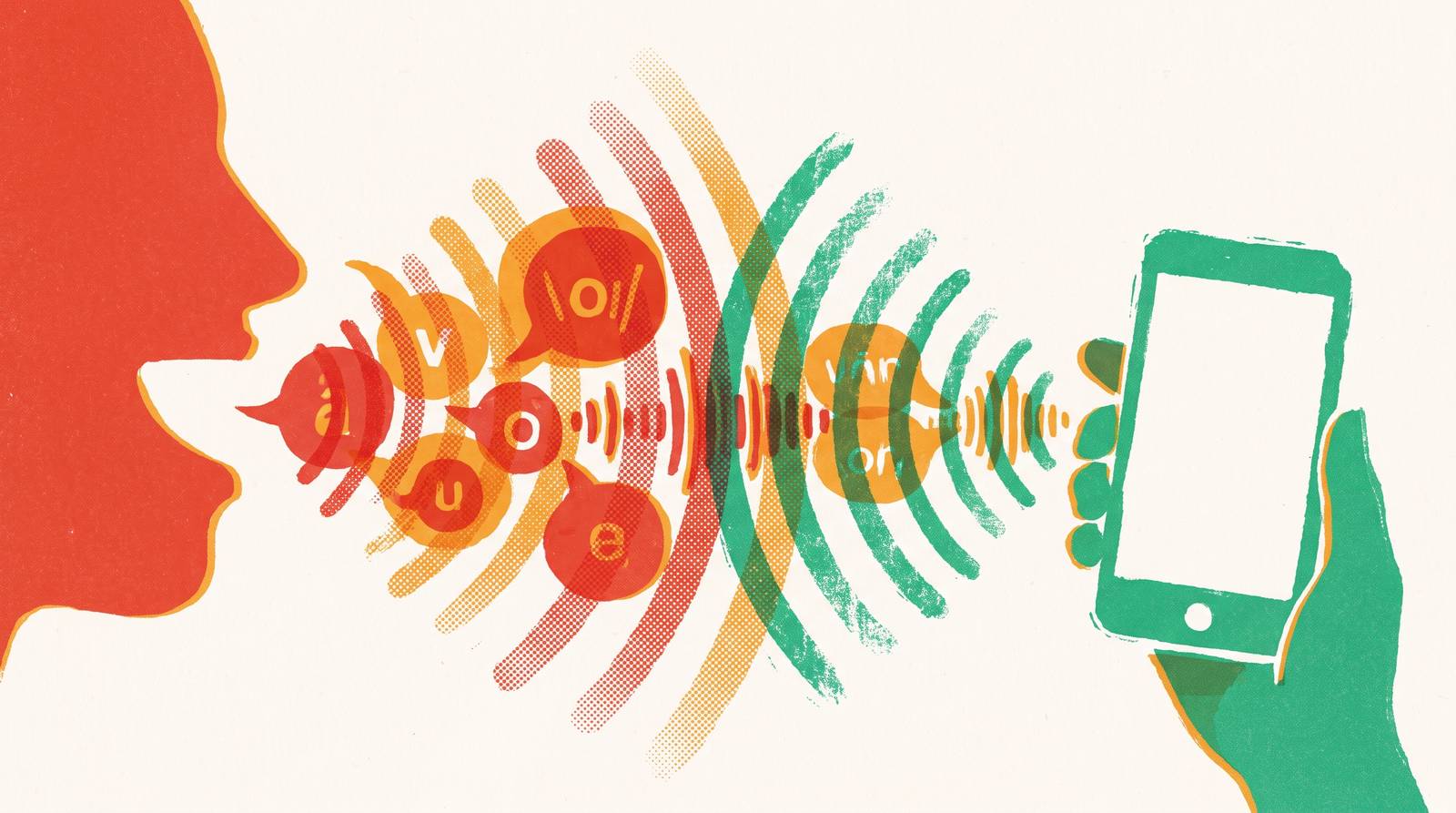
North America leads the global pronunciation training market at an estimated $1.3 billion in 2025, roughly 34% of global revenue. The U.S. has over 46 million immigrants and an estimated 67 million non-native English speakers, most navigating professional environments in a language that was not built for their mouths. Investment in speech AI exceeded $4.2 billion globally in 2024, a substantial portion directed toward multilingual accent modeling. Apps are no longer a scrappy alternative to human coaches; in several respects, they compete directly. But market size tells a prospective user nothing useful about which tool to open, because the market has splintered into philosophically distinct camps, and picking the wrong one costs you months.
The Two Fundamentally Different Theories of How Pronunciation Actually Improves
The first theory is surgical drilling: isolate specific phonemes, repeat until an AI scores accuracy, iterate. The second is immersive conversation: let accuracy develop the way it would in a native environment, through contextual repetition rather than isolated corrective loops. These are not competing philosophies so much as tools calibrated for different problems, which means the question of which is "better" is the wrong question entirely.
A documented plateau effect hits a substantial majority of learners after roughly six months on standard tools. The mechanism is not mysterious: the brain struggles to perceive sounds it cannot yet physically produce. Listen-and-repeat apps stall precisely here because they address acoustic input without touching mouth mechanics. Meanwhile, a 2025 study in the Journal of Second Language Pronunciation found that consistent daily practice, not the specific app, is the decisive variable, and research published that same year in Studies in Second Language Acquisition reinforced that lexical and grammatical confidence are as central to fluency as phonetics. An accent-only approach, by that measure, addresses less than half the actual problem.
One thing worth naming before we get into the tools: a surprising number of learners who plateau are not failing to produce sounds correctly. They have simply lost the ability to hear their own progress. The map problem is real: you can study a city from satellite view for months and still feel completely lost the first time you walk the streets. That gap between knowing and trusting is something no app scorecard will flag for you.
What ELSA Speak Does Well and Where It Fits
ELSA is notable for its scale: 90 million downloads across 195 countries as of early 2026, used by more than 400 organizations. Its deep-learning ASR engine achieves 95% precision in detecting phoneme-level errors. If a learner's tongue is not contacting the correct position for a given consonant, the AI detects the missing acoustic signature and flags it.
Users who complete at least ten minutes of daily practice for thirty consecutive days achieve an average 47% improvement in pronunciation accuracy scores. Ninety percent report measurable improvement within three months; 95% report greater confidence in that same window, per Capterra. ELSA's Role Play mode extends beyond drills into scenario-based practice, including introductions, professional questions, and presentations, scored on fluency and vocabulary. The company has raised $60 million over multiple funding rounds, with revenue reaching $32.5 million in 2023.
Where ELSA is less focused is in connected speech and conversational rhythm. It is strong at identifying specific sound errors. It is less oriented toward helping you sound like someone for whom the rhythm of a sentence is instinctive rather than assembled. That distinction is where BoldVoice earns its position.
What BoldVoice Does Well and Where It Fits
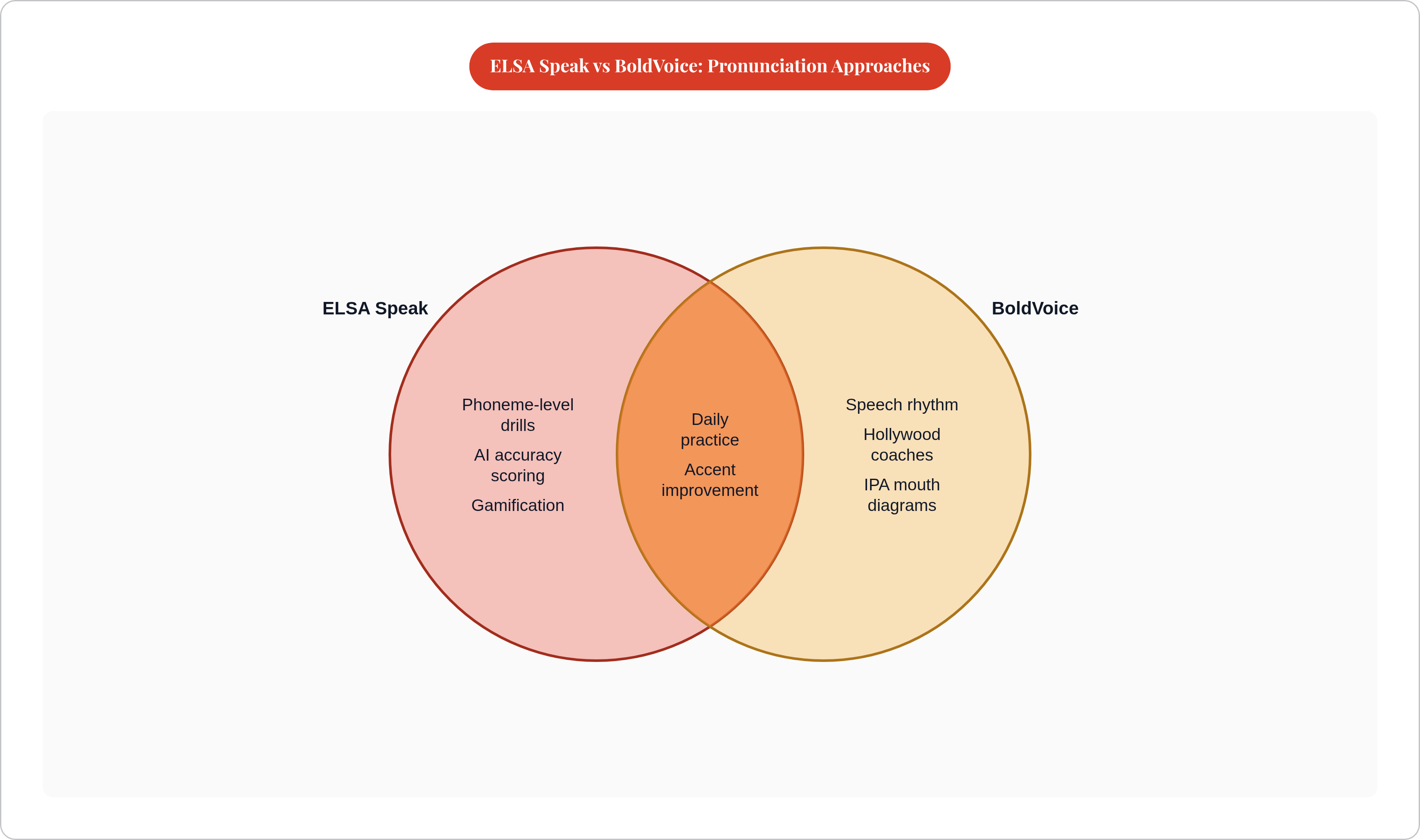
BoldVoice was built by immigrants, for immigrants, and the pedagogical lineage shows in how it is structured. At its core are short video lessons taught by Hollywood accent coaches, the same professionals who prepare actors to credibly inhabit accents on screen. Lessons use the International Phonetic Alphabet alongside mouth diagrams, making the mechanics of sound production explicit rather than something you are supposed to intuit through repetition. The platform addresses speech rhythm, connected speech, and intonation: precisely the elements ESL professionals most frequently struggle with in fast, natural American English, because those elements are almost never formally taught.
BoldVoice secured $21 million in funding in December 2025. App Store reviews from users are specific in a way that aggregated satisfaction scores rarely are. One user — a native Spanish speaker two decades into living in the U.S. — reported that her problem was pronunciation rather than grammar. She had tried conventional ESL classes, worked with a speech therapist, and still felt like a stranger inside her own sentences, and credited BoldVoice with addressing a gap the existing market had left open.
The distinction from ELSA is not about quality; it is about layer. ELSA works at the level of individual sounds. BoldVoice works at the level of whether those sounds, assembled together, sound natural in context.
What ChatterFox and Pronounce Add to the Picture
ChatterFox occupies a category that is rare: a hybrid model combining AI practice tools with weekly feedback from certified American accent coaches who listen to voice recordings and return personalized corrections. This is not automated feedback with a human interface bolted onto it. An actual human ear engages with your actual voice, which turns out to matter more than you expect if you have only ever worked with algorithmic scoring.
ChatterFox is worth considering specifically for learners who have hit the plateau that pure AI feedback cannot surmount. When the algorithm has flagged the same issue repeatedly without producing change, a human coach who can rephrase the correction, demonstrate it, or simply frame it differently offers something the app cannot. The tradeoff is real: cost, scheduling, and the discipline to treat it like a recurring appointment rather than an on-demand tool.
Pronounce takes a categorically different approach. Rather than simulating professional scenarios, it analyzes real ones: actual meetings, calls, presentations, then surfaces actionable feedback from contexts that already exist in a user's professional life. The question Pronounce is designed to answer is not "can I perform well in a simulation?" It is closer to "what do I actually sound like at 9 a.m. on a Tuesday video call when I have not slept well?" For professionals who want feedback on conversations they are already having rather than synthetic approximations of them, that distinction is significant and unreplicated elsewhere in the market.
Going Further Than Accent Work
Pronunciation apps address one layer of the verbal-skill stack: are you producing sounds correctly? A different question entirely is whether you are communicating with clarity, confidence, and presence under real conditions.
The daily-practice mechanism is similar to the drill apps: a prompt, a recorded response, a scored result. But the scope is full verbal delivery. Fluency, structure, pacing, and how you hold a thought when the pressure is on are all in scope. That last variable is one that no amount of phoneme drilling touches, and it is a source of real frustration for people who have done the work on their accent and still feel like they are not landing in rooms.
The natural pairing many learners arrive at is using a drill app for specific sounds and a verbal-delivery app for what remains after those sounds are clean. Verbal confidence does not emerge automatically from accent correction. Someone who has spent a year on phonemes and still struggles to hold attention in a meeting has a different problem now, and treating it with more phoneme drills is unlikely to resolve it.
How to Match the Right App to What You Actually Need to Fix
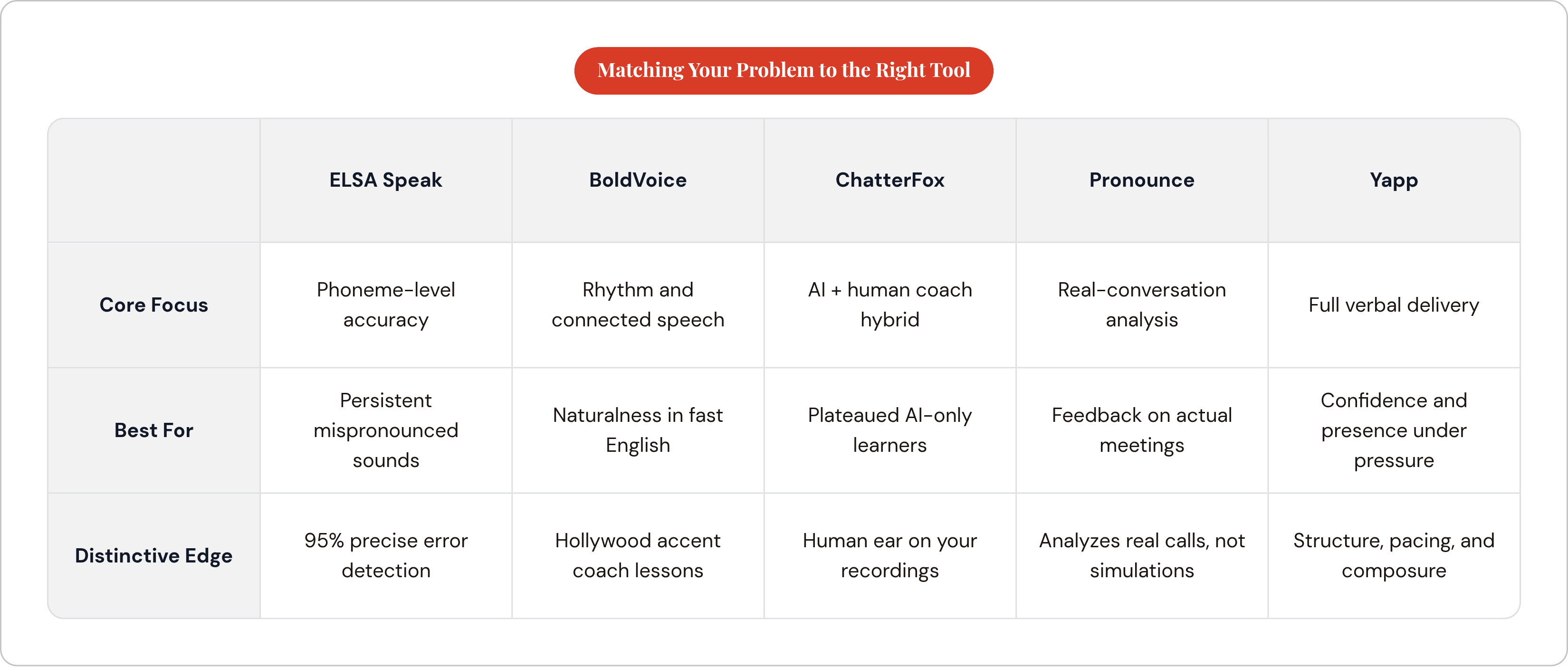
The diagnostic question is simple, even if answering it honestly takes a moment: is the problem specific sounds, natural rhythm, real-conversation performance, or overall verbal presence?
Persistent mispronounced phonemes point toward ELSA Speak. The precision, gamification mechanics, and scoring rigor are calibrated for exactly that kind of targeted correction.
Rhythm, connected speech, and naturalness in fast American English point toward BoldVoice, where the actor-trained coaches and IPA-grounded visual instruction address fluency above the level of individual sounds.
A plateau after months of drilling, where the AI keeps flagging the same issues without resolution, points toward ChatterFox. A human ear addresses what the algorithm alone has not.
A desire for feedback on actual professional conversations rather than simulations points toward Pronounce. The context is already real; the feedback should match it.
Accent work that has meaningfully improved, combined with persistent uncertainty about verbal confidence under pressure, points toward a tool focused on full verbal delivery, scoring overall speaking with a daily prompt rather than isolated phoneme drills.
Many effective learners use two tools in parallel: a drill app for phoneme work and a conversation or scoring app for real-world delivery. The research supports this. Consistent daily practice, even ten to fifteen minutes, produces measurable results within weeks. The variable that actually separates the people who improve from those who do not is consistency, and no comparative analysis changes that.